How to Put Coolant in a Hyundai Accent the Right Way
Adding coolant to your Hyundai Accent is a simple maintenance task that keeps your engine running cool and prevents overheating. This guide walks you through everything you need to know, from choosing the right coolant type to safely filling the reservoir. You will learn the exact steps, common mistakes to avoid, and expert tips that save you time and money.
Keeping your Hyundai Accent running smoothly starts with understanding the basics of engine cooling. One of the simplest yet most important maintenance tasks you can do is adding coolant. Whether you are a complete beginner or someone who has worked on cars before, this guide will show you exactly how to put coolant in a Hyundai Accent the right way.
Your car’s cooling system works hard every time you turn the key. It keeps your engine at the right temperature and prevents it from overheating. When the coolant level drops too low, your engine can suffer serious damage. That is why knowing how to add coolant properly matters so much.
In this article, we will cover everything from choosing the correct coolant type to the step-by-step process of filling your Hyundai Accent. We will also look at common mistakes people make, when to flush the system, and how to spot early warning signs of cooling system problems. By the end, you will feel confident handling this task on your own.
Let us dive in and make sure your Hyundai Accent stays cool, healthy, and ready for the road.
Key Takeaways
- Use the correct coolant type: Hyundai Accent models typically require HOAT or ethylene glycol-based coolant mixed 50/50 with distilled water.
- Always let the engine cool down: Opening the radiator cap on a hot engine can cause serious burns from pressurized steam and hot coolant.
- Check the coolant level regularly: Monthly checks help you catch leaks early and prevent engine overheating damage.
- Never mix different coolant colors: Mixing incompatible coolants can create sludge that clogs your cooling system.
- Flush the system every 30,000 miles: Regular coolant flushes remove buildup and keep your Hyundai cooling system working efficiently.
- Watch for warning signs: A rising temperature gauge, sweet smell, or puddle under your car signals a coolant problem that needs immediate attention.
📑 Table of Contents
- Understanding Your Hyundai Accent Cooling System
- Choosing the Right Coolant for Your Hyundai Accent
- Step-by-Step Guide to Adding Coolant to Your Hyundai Accent
- Common Mistakes When Adding Coolant
- When and How to Flush Your Hyundai Accent Cooling System
- Maintaining Your Hyundai Accent Cooling System for Longevity
- Comparison Table: Coolant Types for Hyundai Accent
- Key Takeaways
- Conclusion
Understanding Your Hyundai Accent Cooling System
Before you open any coolant bottle, it helps to understand how your cooling system works. The system is designed to pull heat away from the engine and keep it running at a safe temperature. Without it, your engine would overheat within minutes of driving.
How the Cooling System Works
Your Hyundai Accent uses a liquid cooling system. Coolant flows through passages inside the engine block and cylinder head. As it moves, it absorbs heat from the engine. Then it travels to the radiator, where air flowing through the radiator fins cools the liquid down. The cooled coolant cycles back through the engine, and the process repeats.
A water pump pushes the coolant through the system. A thermostat opens and closes to regulate the flow based on engine temperature. The radiator cap maintains pressure in the system, which raises the boiling point of the coolant and helps it work more effectively.
Key Components You Should Know
Here are the main parts of your Hyundai Accent cooling system that you will interact with when adding coolant:
- Coolant Reservoir (Expansion Tank): This is the clear plastic tank near the radiator. It has MIN and MAX level markings. This is where you will add most of your coolant.
- Radiator Cap: This seals the radiator and maintains system pressure. Never open it while the engine is hot.
- Radiator Hoses: These rubber hoses carry coolant between the engine and the radiator. They can crack or leak over time.
- Thermostat: This valve regulates coolant flow based on engine temperature.
- Water Pump: This component circulates coolant throughout the system.
- Cooling System Fan: This fan helps cool the radiator when the car is idling or moving slowly.
Where Is the Coolant Reservoir on a Hyundai Accent?
On most Hyundai Accent models, the coolant reservoir is located on the left side of the engine bay (when facing the engine). It is a translucent white tank with MIN and MAX level lines printed on the side. The radiator cap is on top of the actual radiator, which sits at the front of the engine bay.
If you are unsure about the exact location, check your owner’s manual. It will have a diagram showing all the key components under the hood. Taking a moment to locate these parts before you start will save you time and frustration.
Choosing the Right Coolant for Your Hyundai Accent
Not all coolants are the same. Using the wrong type can damage your engine and cooling system components. Hyundai Accent models have specific coolant requirements that you need to follow carefully.
What Type of Coolant Does a Hyundai Accent Use?
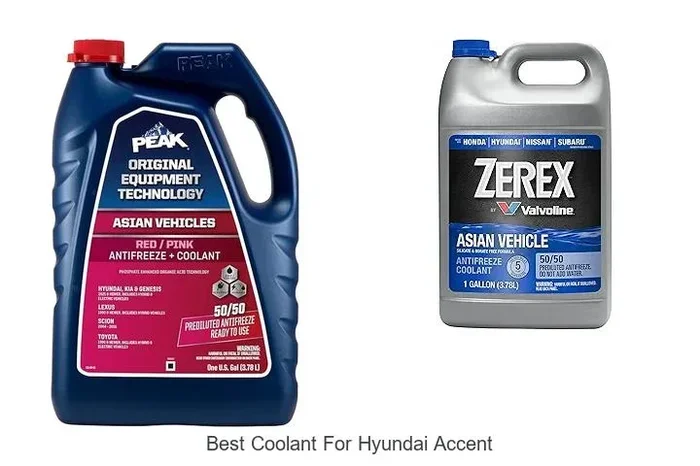
Most Hyundai Accent models use HOAT coolant (Hybrid Organic Acid Technology) or ethylene glycol-based coolant. The exact specification depends on your model year. Here is a quick breakdown:
- 2011 and newer Hyundai Accent: Typically use Hyundai Genuine Coolant (HOAT-based), which is usually turquoise or pink in color.
- 2006 to 2010 Hyundai Accent: Often use a green or orange ethylene glycol-based coolant.
- Older models (pre-2006): May use traditional green IAT (Inorganic Acid Technology) coolant.
Can You Use Universal Coolant?
Some universal or “lifetime” coolants claim to work with any vehicle. While they might be compatible, it is always best to use the coolant specified by Hyundai for your specific model year. Universal coolants do not always meet the exact chemical formulation that your cooling system needs. Using the wrong coolant can lead to corrosion, reduced cooling efficiency, and even engine damage over time.
Coolant Mix Ratio
Most coolants come pre-mixed, but many are sold concentrated and need to be diluted. The standard mix ratio is 50% coolant and 50% distilled water. This provides optimal freeze protection and boiling point elevation. In extremely cold climates, you can go up to a 60/40 coolant-to-water ratio, but going beyond that can actually reduce cooling performance.
Always use distilled water, not tap water. Tap water contains minerals that can cause buildup inside your cooling system and lead to clogs over time.
Coolant Color Guide for Hyundai Accent
Coolant color helps you identify the type, but it is not always a perfect indicator. Here is what different colors mean for your Hyundai Accent:
- Turquoise/Pink: HOAT coolant (common in newer Hyundai models)
- Green: Traditional IAT coolant (older models)
- Orange/Dark Green: OAT or HOAT coolant (some universal coolants)
If you are ever unsure about which coolant to use, check your owner’s manual or ask a Hyundai dealer. Using the right coolant protects your engine and keeps your warranty intact.
Step-by-Step Guide to Adding Coolant to Your Hyundai Accent
Now that you understand your cooling system and have the right coolant, let us walk through the process step by step. This is a straightforward task that most people can complete in about 15 to 20 minutes.
Step 1: Gather Your Supplies
Before you start, make sure you have everything you need within reach:
- The correct type of coolant for your Hyundai Accent
- Distilled water (if using concentrated coolant)
- A clean funnel
- A clean rag or towel
- Gloves (coolant is toxic and can irritate your skin)
- Safety glasses (optional but recommended)
Step 2: Park on a Level Surface and Let the Engine Cool
Park your Hyundai Accent on a flat, level surface. Turn off the engine and wait at least 30 minutes for it to cool completely. The cooling system is pressurized when the engine is running, and opening it too soon can cause hot coolant to spray out and cause burns.
Use the engine temperature gauge on your dashboard as a guide. If the needle is in the normal range, you are likely safe to proceed. But if the engine was just running, give it extra time to cool down.
Step 3: Locate the Coolant Reservoir
Open the hood and find the coolant reservoir. It is the translucent tank with MIN and MAX lines on the side. Remove the cap by turning it counterclockwise slowly. If you hear a hissing sound, wait a moment — there may still be some residual pressure in the system.
Step 4: Check the Current Coolant Level
Look at the side of the reservoir. The coolant level should be between the MIN and MAX marks when the engine is cold. If the level is below the MIN line, you need to add more coolant. If it is above the MAX line, you do not need to add any.
While you are at it, take a moment to inspect the coolant. It should be clear and free of debris. If the coolant looks rusty, milky, or has particles floating in it, that is a sign that your cooling system needs a full flush.
Step 5: Add Coolant to the Reservoir
Place a clean funnel into the opening of the coolant reservoir. Slowly pour in the coolant mixture until it reaches the MAX line. Do not overfill. Coolant expands as it heats up, and overfilling can cause pressure buildup and leaks.
If you are adding coolant to a cold engine, fill it to the MAX line. If the engine is slightly warm (but not hot), fill it to the halfway point between MIN and MAX, then let the engine run for a few minutes so the coolant circulates and the level adjusts.
Step 6: Replace the Reservoir Cap
Remove the funnel and wipe any spilled coolant with a clean rag. Replace the reservoir cap by twisting it clockwise until it clicks into place. Make sure it is secure — a loose cap can cause coolant to leak or the system to lose pressure.
Step 7: Start the Engine and Check for Leaks
Start your Hyundai Accent and let it idle for a few minutes. Watch the temperature gauge to make sure it stays in the normal range. While the engine is running, look under the car and around the hoses for any signs of leaks.
Once the engine reaches operating temperature, the thermostat should open and allow coolant to flow into the radiator. You may notice the coolant level in the reservoir drop slightly — this is normal. If it drops below MIN, turn off the engine, let it cool, and add a small amount to bring it back up.
Quick Tips for Adding Coolant
- Always add coolant to the reservoir, not directly into the radiator (unless you are bleeding air from the system).
- Clean the reservoir neck before removing the cap to prevent dirt from entering the cooling system.
- Dispose of old coolant properly — it is toxic to animals and should never be poured down a drain or onto the ground.
- Keep a bottle of distilled water in your trunk for emergency top-ups when you are on the road.
Common Mistakes When Adding Coolant
Even a simple task like adding coolant can go wrong if you are not careful. Here are the most common mistakes people make, and how to avoid them.
Mistake 1: Opening the Radiator Cap on a Hot Engine
This is the most dangerous mistake. When the engine is hot, the cooling system is under high pressure. Opening the cap can cause a sudden release of steam and boiling coolant, which can cause severe burns. Always wait for the engine to cool completely before touching the radiator cap.
Mistake 2: Using the Wrong Coolant Type
Different coolants have different chemical formulations. Mixing incompatible coolants can create a gel-like substance that clogs your cooling system passages. This restricts coolant flow and can lead to engine overheating. Always use the coolant type recommended for your specific Hyundai Accent model year.
Mistake 3: Overfilling the Reservoir
Coolant expands when it heats up. If you fill the reservoir to the brim when the engine is cold, the expanding coolant will have nowhere to go. This can cause pressure buildup, leaks, or even damage to the reservoir or radiator hoses.
Mistake 4: Using Tap Water Instead of Distilled Water
Tap water contains minerals like calcium and magnesium. Over time, these minerals build up inside your cooling system and form scale. This scale can clog narrow passages in the radiator and heater core, reducing cooling efficiency. Always use distilled water when mixing coolant.
Mistake 5: Ignoring a Low Coolant Level
If you notice that your coolant level drops frequently, that is a sign of a leak. Topping off the coolant without finding the source of the leak is a temporary fix at best. Continuing to drive with a low coolant level can cause your engine to overheat, which can lead to cracked head gaskets, warped cylinder heads, or even a totaled engine.
Expert Insight
Experienced mechanics say that a sudden drop in coolant level almost always indicates a leak somewhere in the system. Common leak points include radiator hoses, the water pump seal, the radiator itself, and the heater core. If you are frequently topping off your coolant, have a professional inspect the entire cooling system for leaks.
When and How to Flush Your Hyundai Accent Cooling System
Adding coolant is not the only maintenance task you need to do. Over time, old coolant breaks down and loses its effectiveness. It can also accumulate rust, scale, and debris that reduce cooling performance. A coolant flush removes all the old fluid and replaces it with fresh coolant.
How Often Should You Flush the Cooling System?
Hyundai recommends flushing the cooling system every 30,000 miles or every two years, whichever comes first. However, if you drive in extreme heat or stop-and-go traffic, you may need to flush it more frequently. Always check your owner’s manual for the recommended maintenance schedule for your specific model year.
Signs Your Cooling System Needs a Flush
Here are some warning signs that tell you it is time for a coolant flush:
- The coolant looks dark, rusty, or discolored
- There is visible debris or particles floating in the coolant
- The engine runs hotter than normal
- The heater does not blow warm air
- You notice a sweet smell coming from under the hood
- The coolant warning light on your dashboard stays on
How to Flush the Cooling System
A full coolant flush is a more involved process than simply adding coolant. Here is a brief overview of the steps:
- Let the engine cool completely.
- Place a drain pan under the radiator.
- Open the radiator drain valve and let the old coolant flow out.
- Close the drain valve and fill the radiator with distilled water.
- Run the engine for 10 to 15 minutes with the heater on high.
- Turn off the engine and let it cool.
- Drain the water from the radiator.
- Repeat the process with fresh water if the drained water is still dirty.
- Once the drained water runs clear, close the drain valve.
- Fill the system with fresh coolant mixed at the correct ratio.
- Bleed any air from the system by running the engine with the radiator cap off.
- Check the coolant level after the engine reaches operating temperature and top off if needed.
If this process sounds intimidating, do not worry. Many auto parts stores and Hyundai dealerships offer coolant flush services at reasonable prices. A professional flush typically costs between $100 and $200, which is a small price compared to the cost of repairing an overheating engine.
Maintaining Your Hyundai Accent Cooling System for Longevity
Prevention is always better than repair when it comes to your cooling system. A few simple habits can keep your Hyundai Accent’s cooling system in great shape for years to come.
Regular Coolant Level Checks
Make it a habit to check your coolant level once a month. It only takes a minute and can help you catch problems early. Simply pop the hood, locate the reservoir, and check that the level is between MIN and MAX. If it is low, top it off with the correct coolant type.
Inspect Hoses and Connections
Take a look at the radiator hoses and connections every few months. Look for cracks, swelling, or soft spots in the hoses. Feel around the connections for any dampness or residue, which can indicate a slow leak. Replacing a worn hose is much cheaper than repairing a failed water pump or radiator.
Monitor Your Temperature Gauge
Your dashboard temperature gauge is one of the most important tools for monitoring your engine’s health. While driving, keep an eye on the gauge. If the needle starts to climb toward the hot zone, pull over safely and turn off the engine. Continuing to drive with an overheating engine can cause catastrophic damage.
Replace the Thermostat When Needed
The thermostat is a small but critical component. If it gets stuck closed, coolant cannot flow to the radiator and the engine will overheat. If it gets stuck open, the engine may take too long to warm up, which reduces fuel efficiency and increases wear. Thermostats are relatively inexpensive and easy to replace.
Keep the Radiator Clean
Debris like leaves, bugs, and dirt can accumulate on the front of the radiator and block airflow. This reduces the radiator’s ability to cool the coolant. Periodically clean the front of the radiator with a soft brush or gentle stream of water to keep it clear.
Use Genuine Hyundai Parts When Possible
While aftermarket parts can work well, using genuine Hyundai parts ensures the best fit and compatibility with your cooling system. This is especially true for components like the thermostat, water pump, and radiator cap, which need to meet specific pressure and temperature ratings.
Expert Insight
Many Hyundai owners do not realize that the cooling system also includes the heater core, which provides warm air to the cabin. If your heater stops working or blows cold air, it could be a sign of a low coolant level or a clogged heater core. Regular coolant maintenance keeps both your engine and your heater working properly.
Comparison Table: Coolant Types for Hyundai Accent
| Coolant Type | Color | Best For | Lifespan | Compatibility |
|---|---|---|---|---|
| HOAT (Hybrid Organic Acid Technology) | Turquoise/Pink | 2011+ Hyundai Accent | 5 years / 150,000 miles | Most modern Hyundai models |
| OAT (Organic Acid Technology) | Orange/Dark Green | Some newer Hyundai models | 5 years / 150,000 miles | Select Hyundai and GM vehicles |
| IAT (Inorganic Acid Technology) | Green | Pre-2006 Hyundai Accent | 2 years / 30,000 miles | Older vehicles with copper/brass radiators |
| Universal Coolant | Varies | Emergency top-offs | Varies | Check compatibility before use |
As you can see from the comparison table, using the correct coolant type for your specific Hyundai Accent model year is essential. When in doubt, consult your owner’s manual or speak with a Hyundai service advisor.
Key Takeaways
- Always use the correct coolant type recommended for your Hyundai Accent model year — typically HOAT or ethylene glycol-based coolant.
- Let the engine cool completely before opening the coolant reservoir or radiator cap to avoid burns from pressurized hot coolant.
- Mix coolant at a 50/50 ratio with distilled water for optimal freeze protection and boiling point performance.
- Check the coolant level monthly and top off as needed to prevent overheating and engine damage.
- Never mix different coolant colors or types — this can create harmful chemical reactions that clog your cooling system.
- Flush the cooling system every 30,000 miles to remove old, degraded coolant and prevent buildup.
- Watch for warning signs like a rising temperature gauge, sweet smell, or coolant puddles under your car, and address them immediately.
Conclusion
Knowing how to put coolant in a Hyundai Accent the right way is one of the most valuable skills you can develop as a car owner. It is a simple task that takes just minutes but provides enormous protection for your engine. By using the correct coolant type, following the proper steps, and avoiding common mistakes, you keep your Hyundai Accent running at peak performance.
Regular maintenance of your cooling system — including checking levels, inspecting hoses, and performing timely coolant flushes — goes a long way toward preventing costly repairs. A well-maintained cooling system means a cooler engine, better fuel efficiency, and peace of mind every time you hit the road.
Take the time to learn your specific Hyundai Accent model’s requirements. Check your owner’s manual, keep the right supplies on hand, and make coolant maintenance part of your regular routine. Your engine will thank you for it, and you will save money on expensive repairs down the road.
Stay proactive, stay informed, and keep your Hyundai Accent running strong for years to come.
Frequently Asked Questions
What happens if I put the wrong coolant in my Hyundai Accent?
Using the wrong coolant type can cause chemical incompatibility that leads to corrosion, clogs, and reduced cooling efficiency. Different coolant formulations are designed for specific engine materials and seal types. If you accidentally add the wrong coolant, have the system flushed and refilled with the correct type as soon as possible to prevent damage.
Can I just add water to my coolant reservoir in an emergency?
Yes, adding plain water is better than driving with no coolant at all. However, water does not provide the same corrosion protection or boiling point elevation as proper coolant. If you top up with water, get your cooling system flushed and refilled with the correct coolant mixture at the earliest opportunity.
How do I know if my Hyundai Accent has a coolant leak?
Common signs of a coolant leak include a sweet smell under the hood, a puddle of colored liquid under your parked car, a frequent need to top off coolant, or steam coming from the engine bay. If you notice any of these signs, inspect the radiator hoses, water pump, and radiator for visible leaks and have a mechanic check the system promptly.
How long does coolant last in a Hyundai Accent?
Most Hyundai Accent models use coolant that lasts between 30,000 and 60,000 miles, or approximately 3 to 5 years. However, coolant degrades over time, so it is important to follow the maintenance schedule in your owner’s manual. Regularly checking the coolant condition can also help you determine when it is time for a replacement.
Is it safe to drive with low coolant?
No, driving with low coolant is risky. Without enough coolant, your engine cannot regulate its temperature properly, which can lead to overheating, warped cylinder heads, or a blown head gasket. If your coolant level is low, top it off immediately and investigate the cause before driving long distances.
Do I need to bleed air from the cooling system after adding coolant?
On most Hyundai Accent models, the cooling system is designed to bleed air naturally as the engine runs. However, if you notice the temperature gauge fluctuating or the heater blowing cold air, there may be an air pocket trapped in the system. In this case, run the engine with the radiator cap off and the heater on high until the thermostat opens and the air bubbles stop.