How a Car Moves With Constant Acceleration Explained
When a car moves with constant acceleration, its speed increases by the same amount every second. This fundamental concept in motion physics explains how vehicles behave on roads, tracks, and highways. Understanding constant acceleration helps drivers, engineers, and car enthusiasts grasp the science behind vehicle performance and safety.
Have you ever pressed the gas pedal in a car and felt that steady push against your back? That feeling happens because a car moving with constant acceleration gains speed at a perfectly steady rate. Every single second, the vehicle adds the same amount of speed. It is one of the most basic yet powerful ideas in physics.
Understanding how constant acceleration works changes the way you see driving. You start to notice how your car responds to the pedal. You begin to understand why certain vehicles feel so quick off the line. This concept also helps engineers design safer cars and better roads. Whether you are a curious driver, a student studying physics, or a car enthusiast, this guide breaks it all down for you.
In this article, we will explore what constant acceleration really means, the formulas behind it, real-world examples, and practical tips. By the end, you will have a clear picture of how a car moving with constant acceleration behaves and why it matters in everyday life. Let us dive right in.
Key Takeaways
- Constant acceleration means equal speed changes per second: A car gains the same amount of velocity in each time interval.
- The acceleration formula is simple: Acceleration equals the change in velocity divided by time.
- Newton’s Second Law drives car acceleration: Force applied to the car equals mass times acceleration.
- Kinematic equations predict motion precisely: You can calculate final velocity, distance, and time with just a few inputs.
- Real-world examples include sports cars and highway merging: Many driving situations involve near-constant acceleration.
- Common mistakes include confusing speed with acceleration: Speed tells you how fast; acceleration tells you how fast the speed changes.
- Practical application improves driving awareness: Understanding these concepts makes you a safer, more informed driver.
📑 Table of Contents
- What Does Constant Acceleration Mean for a Car?
- The Physics Behind a Car Moving With Constant Acceleration
- Real-World Examples of Constant Acceleration in Cars
- How to Calculate Distance and Speed During Constant Acceleration
- Common Mistakes People Make About Constant Acceleration
- Tips for Understanding and Applying Constant Acceleration Concepts
- How Constant Acceleration Connects to Braking and Safety
- Key Takeaways
- Conclusion
What Does Constant Acceleration Mean for a Car?
The Basic Definition
Acceleration measures how quickly something changes its speed. When a car moves with constant acceleration, the speed goes up by the same amount every single second. If a car adds 5 miles per hour each second, it keeps doing that for the entire time the pedal stays pressed.
This is different from variable acceleration, where the rate of speed change keeps shifting. Think of it like climbing a hill at a steady pace versus walking up a bumpy trail. One feels smooth and predictable. The other feels uneven and harder to manage. Constant acceleration is the smooth, predictable version.
Uniform acceleration is another name for this type of motion. The word “uniform” simply means “the same throughout.” So when physicists talk about uniform acceleration in vehicles, they mean the car speeds up at a steady, unchanging rate.
Why It Matters in Real Driving
You might wonder why this matters on the road. The truth is, constant acceleration affects your daily driving more than you think. When you merge onto a highway, you want a steady increase in speed. When a traffic light turns green, you press the pedal and expect a smooth pickup.
Car manufacturers also design engines and transmissions with constant acceleration in mind. They tune the powertrain so the car delivers smooth, predictable force. This makes driving more comfortable and safer for everyone inside the vehicle.
The Physics Behind a Car Moving With Constant Acceleration
Key Formulas You Need to Know
Physics gives us neat formulas to describe motion with constant acceleration. These equations let you calculate speed, distance, and time without even touching the car. Here are the most important ones:
- Acceleration formula: a = (v – u) / t. This means acceleration equals final velocity minus initial velocity, divided by time.
- Final velocity equation: v = u + at. This tells you how fast the car goes after a certain time.
- Distance equation: s = ut + 0.5at². This calculates how far the car travels during acceleration.
- Velocity-displacement relation: v² = u² + 2as. This links speed directly to distance covered.
These kinematic equations are the backbone of motion physics for vehicles. Each letter stands for a specific value. “u” is the starting speed. “v” is the ending speed. “a” is the acceleration. “t” is the time. “s” is the distance traveled.
Newton’s Second Law and Car Motion
Nineteenth-century scientist Isaac Newton gave us one of the most important laws in all of physics. Newton’s Second Law states that force equals mass times acceleration, or F = ma. This law explains why a car accelerates when you press the gas pedal.
When your foot pushes the pedal, the engine creates force. That force travels through the wheels to the road. The car’s mass determines how much it speeds up for each unit of force. A lighter car accelerates faster than a heavier one with the same engine power. This is why force and mass are the two key players in car acceleration dynamics.
Here is a quick look at how mass affects acceleration:
- Lighter car with 150 N force: Accelerates faster because there is less mass to move.
- Heavier car with 150 N force: Accelerates slower because the same force must move more mass.
- Same car with 300 N force: Accelerates twice as fast because the force doubled.
Real-World Examples of Constant Acceleration in Cars
Sports Cars and Performance Vehicles
Few things demonstrate constant acceleration better than a sports car launching from a stoplight. High-performance vehicles like the Porsche 911 or Chevrolet Corvette deliver smooth, powerful force to the wheels. The result is a rapid but steady increase in speed.
Many car magazines test zero to sixty times to measure how quickly a vehicle reaches 60 miles per hour from a standstill. This test essentially measures linear acceleration over a short time period. A car that reaches 60 mph in 3.5 seconds has very high constant acceleration during that burst.
Here are some real-world examples of car acceleration performance:
- Tesla Model 3: Reaches 60 mph in about 3.1 seconds with smooth electric motor output.
- Honda Civic: A more modest 0-60 time of around 7 seconds, showing gentle rate of change of velocity.
- Ferrari 488: Hits 60 mph in roughly 2.8 seconds, showcasing extreme but controlled acceleration.
Everyday Driving Scenarios
You do not need a supercar to experience constant acceleration. Plenty of daily situations involve this type of motion. When you drive up a ramp onto a highway, you typically press the pedal steadily. The car gains speed in a predictable, uniform way.
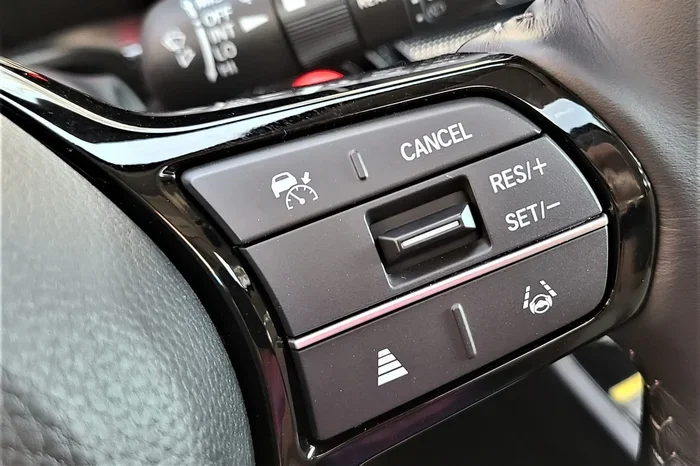
Even cruise control on a highway involves a form of acceleration management. When you set cruise control on a flat road, the car maintains a constant speed. But when you press the resume button after slowing down, the car accelerates back to the set speed at a steady rate.
School buses also offer a great example. They are heavy vehicles that accelerate slowly and steadily. That gentle, predictable pickup is constant acceleration in action. It keeps passengers comfortable and safe.
How to Calculate Distance and Speed During Constant Acceleration
Using the Kinematic Equations
Calculating how far a car travels while accelerating is easier than it sounds. You just need three pieces of information: initial velocity, acceleration rate, and time. Once you have those, the kinematic equations do the rest.
Let us walk through a simple example. Imagine a car starts from rest and accelerates at 3 meters per second squared for 10 seconds. Since it starts from a standstill, the initial velocity is zero. Now we can plug values into the equations:
- Final velocity: v = u + at = 0 + (3 × 10) = 30 meters per second.
- Distance traveled: s = ut + 0.5at² = 0 + 0.5 × 3 × 100 = 150 meters.
So after 10 seconds, the car reaches 30 meters per second and covers 150 meters. These displacement calculations are incredibly useful for understanding vehicle behavior.
Practical Calculation Examples
Let us try another example that feels more like real driving. Say a car is traveling at 20 meters per second and accelerates at 2 meters per second squared for 5 seconds. What is the final speed and distance?
- Final speed: v = 20 + (2 × 5) = 30 meters per second.
- Distance: s = (20 × 5) + 0.5 × 2 × 25 = 100 + 25 = 125 meters.
These calculations help engineers design braking systems, set speed limits, and plan road infrastructure. They also help race car drivers optimize their lap times. Understanding velocity over time gives you a powerful tool for analyzing any moving vehicle.
Common Mistakes People Make About Constant Acceleration
Confusing Speed With Acceleration
The biggest mistake people make is mixing up speed and acceleration. Speed tells you how fast a car is going right now. Acceleration tells you how quickly the speed is changing. A car can have high speed but zero acceleration if it is cruising at a steady 70 miles per hour on the highway.
Think of it this way. A car parked on the street has zero speed and zero acceleration. A car cruising at 60 mph has high speed but zero acceleration. A car going from 30 to 60 mph has increasing speed and positive acceleration. These are three very different states of motion.
Ignoring External Forces
Another common error is forgetting about forces that work against acceleration. Friction from the tires and road slows things down. Air resistance pushes back against the car, especially at higher speeds. These forces reduce the net acceleration a car actually experiences.
Engineers must account for these external forces when designing vehicles. A car might produce enough force to accelerate at 4 meters per second squared on paper. But in real life, friction and drag reduce that number. This is why actual acceleration is always slightly less than theoretical acceleration.
Tips for Understanding and Applying Constant Acceleration Concepts
Quick Tips for Beginners
If you are new to the concept of a car moving with constant acceleration, here are some simple ways to build your understanding:
- Watch the speedometer: Next time you accelerate gently, watch the needle climb. Notice how it moves at a steady rate.
- Count seconds: Pick a fixed point and count how long it takes to reach a certain speed. This gives you a feel for acceleration.
- Compare different cars: Notice how a small car and a large truck accelerate differently from the same stoplight.
- Use online calculators: Many free tools let you plug in values and see results instantly. This builds intuition quickly.
Advanced Insights for Car Enthusiasts
For those who want to go deeper, car acceleration analysis opens up fascinating territory. Engineers use G-force measurements to quantify how hard acceleration pushes on occupants. A car accelerating at 1 g (9.8 meters per second squared) creates a force equal to your body weight pushing you back into the seat.
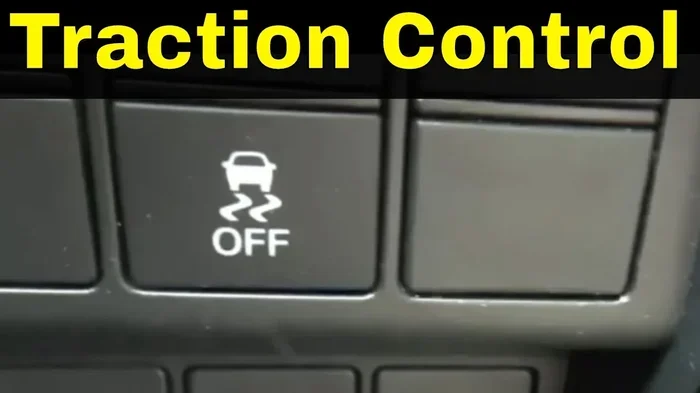
Traction control systems also rely on constant acceleration principles. These electronic systems monitor wheel slip and adjust engine power to maintain smooth acceleration. They prevent the wheels from spinning uselessly on wet or icy roads. This technology has made modern driving significantly safer.
Racing teams take this even further. They use data loggers to record acceleration curves throughout a track. By analyzing these curves, they fine-tune engine tuning, gear ratios, and tire pressure for maximum performance. The science of car motion analysis directly translates into faster lap times and better handling.
How Constant Acceleration Connects to Braking and Safety
Deceleration as Negative Acceleration
Constant acceleration does not only mean speeding up. When you press the brake pedal, the car undergoes negative acceleration, also called deceleration. The same physics applies. The car loses speed at a steady rate until it comes to a complete stop.
Understanding braking deceleration is essential for road safety. It helps you estimate stopping distances. At 60 mph, a typical car needs about 120 feet to stop on a dry road. That distance depends directly on the rate of deceleration the brakes can provide.
The Role of ABS and Braking Systems
Modern cars come equipped with Anti-lock Braking Systems (ABS). These systems prevent the wheels from locking up during hard braking. They allow the driver to maintain steering control while stopping quickly. ABS effectively manages the deceleration rate to keep it within safe limits.
Engineers design braking systems to deliver consistent deceleration. This is essentially the reverse of constant acceleration. The same kinematic equations apply, just with negative values for acceleration. Understanding this connection helps drivers appreciate the sophisticated technology working behind the scenes every time they hit the brakes.
Key Takeaways
- Constant acceleration means equal speed changes per second: A car gains the same amount of velocity in each time interval.
- The acceleration formula is simple: Acceleration equals the change in velocity divided by time.
- Newton’s Second Law drives car acceleration: Force applied to the car equals mass times acceleration.
- Kinematic equations predict motion precisely: You can calculate final velocity, distance, and time with just a few inputs.
- Real-world examples include sports cars and highway merging: Many driving situations involve near-constant acceleration.
- Common mistakes include confusing speed with acceleration: Speed tells you how fast; acceleration tells you how fast the speed changes.
- Practical application improves driving awareness: Understanding these concepts makes you a safer, more informed driver.
Conclusion
A car moving with constant acceleration is a foundational concept that shapes how we understand vehicle motion. From the physics formulas that describe speed changes to the real-world examples on our roads every day, this concept connects theory to practice in a meaningful way. Whether you are a student, a driver, or a car lover, grasping these ideas gives you a deeper appreciation for the machines we rely on daily.
The kinematic equations, Newton’s Second Law, and the relationship between force, mass, and acceleration all work together to explain what happens when you press the gas pedal. You now know how to calculate final velocity, distance traveled, and time intervals for any uniformly accelerating vehicle.
Remember, constant acceleration is not just an abstract physics concept. It is happening every time you drive. Every smooth pickup from a stoplight, every steady merge onto a highway, and every gentle braking stop involves these same principles. The more you understand about how your car accelerates, the better and safer a driver you become.
So next time you hit the road, pay attention to how your car responds to the pedal. You will see constant acceleration in action all around you. And now you have the knowledge to truly understand what is happening beneath you.
Frequently Asked Questions
What exactly is constant acceleration in a car?
Constant acceleration means the car’s speed increases by the same amount every second. If a car gains 5 miles per hour each second, it keeps gaining at that exact rate until something changes. This steady, predictable speed increase is what physicists call uniform acceleration.
How is acceleration different from speed?
Speed tells you how fast a car is moving at any given moment. Acceleration tells you how quickly the speed is changing. A car cruising at a steady 60 mph has high speed but zero acceleration. A car starting from a stoplight has low speed but high acceleration as it picks up pace.
Can a car really maintain constant acceleration for a long time?
In theory, yes. In practice, it is difficult for very long. As a car goes faster, air resistance increases significantly. This growing force works against the engine, gradually reducing the net acceleration. Most real-world examples of constant acceleration last for short bursts, like a 0-60 mph test.
What role does the car’s weight play in acceleration?
Weight, or mass, plays a huge role. According to Newton’s Second Law, a heavier car needs more force to achieve the same acceleration as a lighter car. This is why compact cars often feel quicker off the line than full-size SUVs, even with similar engines.
How do engineers use constant acceleration when designing cars?
Engineers use kinematic equations to predict how a car will perform. They calculate expected final velocity, distance traveled, and time intervals during acceleration. These calculations guide decisions about engine power, gear ratios, and aerodynamics to deliver the best possible performance.
Does constant acceleration apply when braking too?
Absolutely. Braking is simply negative acceleration, or deceleration. When you press the brake pedal, the car loses speed at a steady rate. The same physics formulas apply, just with a negative value for acceleration. This is why understanding constant acceleration also helps you grasp safe stopping distances.
=== CONCLUSION ===
A car moving with constant acceleration follows one of the most elegant and predictable patterns in all of physics. The speed increases steadily, the formulas remain simple, and the real-world applications are everywhere you drive. From sports cars to school buses, from highway merges to emergency stops, constant acceleration shapes the driving experience.
Now that you understand the core concepts, formulas, and practical examples, you can look at every drive with fresh eyes. You will notice how your car accelerates, how different vehicles compare, and why engineers design the way they do. This knowledge makes you not just a better driver, but a more curious and informed one.
Take what you have learned here and apply it on your next drive. Pay attention to how your car picks up speed from a stop. Think about the forces at work beneath you. The road ahead is full of physics, and now you are ready to see it clearly.