How Do You Reset the Warning Lights on Your Car Fast
Resetting warning lights on your car is easier than you think. You can use an OBD-II scanner, disconnect the battery, or try the ignition cycle trick. This guide covers every method so you can handle dashboard warnings quickly and confidently.
You are driving down the road, and suddenly a strange light pops up on your dashboard. It can be scary. Your first thought might be, “What is wrong with my car?” But here is the good news. Resetting warning lights on your car is something you can do yourself in most cases. You do not need to be a mechanic or spend hours in a garage. With the right tools and a little know-how, you can clear those annoying lights in minutes.
This guide will walk you through every method step by step. We will cover the simplest tricks to the most reliable tools. By the end, you will know exactly how to reset warning lights on your car fast and safely. Let us get into it.
Key Takeaways
- Multiple Reset Methods: You can reset warning lights using an OBD-II scanner, battery disconnect, ignition cycle, or fuse removal.
- OBD-II Scanners Are the Best Tool: They clear fault codes fast and give you diagnostic info.
- Battery Disconnect Works but Has Risks: It resets all settings, not just warning lights.
- Not All Lights Should Be Ignored: Some warning lights signal serious problems that need a mechanic.
- Prevention Beats Cure: Regular car maintenance keeps warning lights from returning.
- Know When to Call a Pro: Some issues require expert diagnosis and repair.
📑 Table of Contents
Understanding Your Car’s Warning Lights
Before you learn how to reset lights, you need to understand what they mean. Dashboard warning lights are your car’s way of talking to you. Each symbol tells you something specific about your vehicle’s health. Ignoring them can lead to bigger problems down the road.
What Do Dashboard Warning Lights Mean?
Your car has dozens of sensors monitoring everything from engine temperature to tire pressure. When a sensor detects something wrong, it triggers a warning light. These lights come in different colors, and the color matters.
Red lights mean stop immediately. You might have a serious issue like low oil pressure or an overheating engine. Yellow or orange lights mean something needs attention soon but is not usually an emergency. Green or blue lights are just informational, like your high beams being on.
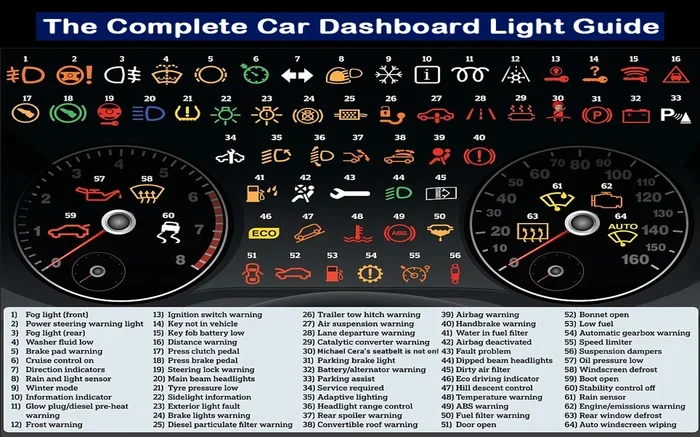
Common Warning Light Symbols You Should Know
Here are the most common warning lights you will see on your dashboard gauges:
- Check Engine Light: This is the most common one. It can mean anything from a loose gas cap to a serious engine problem.
- Oil Pressure Warning: A red oil can symbol. This means your oil level is low or your oil pump is failing.
- Battery Light: A battery icon that lights up when your charging system has an issue.
- ABS Light: This means your anti-lock braking system has a problem. Your brakes may still work, but you need a checkup.
- Tire Pressure Monitoring Light: A horseshoe shape with an exclamation point. It means one or more tires are underinflated.
- Airbag Warning: A passenger airbag icon. This is serious because your airbags may not deploy in a crash.
- Service Engine Soon: Often confused with the check engine light, this usually means a scheduled service is due.
Quick Tip
Keep a small reference card in your glove box with common warning light symbols. This helps you react fast when a light comes on.
How Do You Reset the Warning Lights on a Car
Now that you understand what the lights mean, let us talk about how to actually reset them. There are several methods, and each one works for different situations. Some are quick and easy, while others need a bit more effort.
Method 1: Using an OBD-II Scanner
This is by far the best and most reliable method. An OBD-II scanner plugs into a port under your steering column. It reads the fault codes stored in your car’s computer and lets you clear them.
Here is how to do it:
- Find the OBD-II port. It is usually under the dash on the driver’s side.
- Plug the scanner into the port.
- Turn the ignition to the “on” position (do not start the engine).
- Follow the scanner’s screen instructions to read the codes.
- Note down any codes for your records.
- Select the option to clear or erase the codes.
- Turn off the ignition and wait 30 seconds.
- Restart the car and check if the light is gone.
You can buy a basic OBD-II scanner for under $30 at any auto parts store. If you want something more advanced, a Bluetooth-enabled scanner lets you read codes right from your phone.
Method 2: Disconnecting the Battery
This is the old-school method that still works on many cars. When you disconnect the battery, you reset the entire electrical system, which clears the fault codes and warning lights.
Here is what to do:
- Turn off the engine and all electronics.
- Open the hood and locate the battery.
- Use a wrench to loosen the negative (black) cable first.
- Disconnect the cable and move it away from the battery terminal.
- Wait at least 15 minutes. Some cars need up to 30 minutes.
- Reconnect the negative cable and tighten it.
- Start the car and check if the warning light is off.
Warning: Disconnecting the battery will also reset your radio presets, clock, and other settings. Some cars may need a relearn procedure for things like power windows and sunroof.
Method 3: The Ignition Cycle Trick
This method works on many older cars and some newer models. It is simple and requires no tools at all.
Here is how it works:
- Turn the ignition key to the “on” position without starting the engine.
- Press the gas pedal three times quickly within five seconds.
- Wait a few seconds.
- Turn the ignition off.
- Start the engine and see if the light is gone.
This trick cycles the car’s computer and can clear minor fault codes. It does not work for all vehicles, especially newer models with complex computer systems.
Method 4: Removing the Fuse
Some cars have a specific fuse for the dashboard or engine control unit. Removing this fuse for a few minutes can reset the warning lights. You will need to check your car’s owner manual to find the right fuse.
Be careful with this method. Removing the wrong fuse can disable other systems you need. Always double-check before pulling any fuse.
Comparison of Reset Methods
| Method | Difficulty | Cost | Best For |
|---|---|---|---|
| OBD-II Scanner | Easy | $30-$100 | All cars, most reliable |
| Battery Disconnect | Easy | Free | Older cars, quick reset |
| Ignition Cycle | Very Easy | Free | Older models, minor codes |
| Fuse Removal | Medium | Free | Specific systems only |
Expert Insight
According to automotive technicians, the OBD-II scanner method is the gold standard. It gives you both the ability to read and clear codes. This means you know exactly what triggered the warning light in the first place. A simple battery disconnect might clear the light temporarily, but the underlying problem often comes back.
Step-by-Step Guide to Resetting Warning Lights
Now let us put it all together with a clear step-by-step process you can follow right now.
Step 1: Identify the Warning Light
Look at your dashboard carefully. Which light is on? Is it red, yellow, or green? Take a mental note or even snap a photo with your phone. This helps you track whether the light returns after resetting.
Step 2: Check for Obvious Issues
Before resetting anything, do a quick visual check. Is your gas cap loose? Are your tires flat? Is there steam coming from the hood? Sometimes the fix is as simple as tightening the gas cap and driving for a few miles.
Step 3: Choose Your Reset Method
Based on your car model and the type of warning light, pick the method that works best. For most people, an OBD-II scanner is the easiest and most effective choice.
Step 4: Perform the Reset
Follow the steps for your chosen method carefully. Do not rush through them. Take your time to make sure you do each step correctly.
Step 5: Test Drive and Monitor
After resetting, take a short drive. Pay attention to whether the warning light comes back. If it does, the underlying issue is still there and needs to be addressed properly.
Quick Tip
After resetting any warning light, drive your car for at least 50 to 100 miles. This gives the car’s computer time to run its self-checks and confirm everything is working correctly.
When to See a Professional Mechanic
Resetting a warning light is not always the right move. Some situations call for a professional mechanic, and knowing when to seek help is important for your safety and your wallet.
Warning Signs You Should Not Ignore
You should see a mechanic right away if you notice any of the following:
- The check engine light is flashing, not steady. A flashing light usually means a serious engine misfire that can damage your catalytic converter.
- You hear unusual noises like grinding, knocking, or squealing along with the warning light.
- Your car is pulling to one side or handling strangely.
- You see smoke or steam coming from under the hood.
- The oil pressure or battery light stays on after resetting.
- Multiple warning lights come on at the same time.
Resetting a light without fixing the root cause is like putting a band-aid on a deep wound. The problem will come back, and it might be worse next time.
Common Mistakes People Make
- Resetting the light without diagnosing the problem: This is the biggest mistake. You clear the light, drive for a week, and the same light comes back.
- Using the wrong reset method: Not every method works on every car. Check your owner manual first.
- Ignoring the light entirely: Even if the car seems fine, a warning light means something is off. Get it checked.
- Disconnecting the battery without knowing the consequences: You might lose important settings and learned adaptations in your car’s computer.
- Buying a cheap scanner that does not work: Some budget scanners do not support all car models. Read reviews before buying.
Preventing Warning Lights from Coming Back
The best way to deal with warning lights is to prevent them from appearing in the first place. Regular car maintenance goes a long way toward keeping your dashboard clean and your car running smoothly.
Simple Habits That Help
- Check your tire pressure monthly: Properly inflated tires prevent the TPMS light from coming on and improve fuel economy.
- Tighten your gas cap after every fill-up: A loose gas cap is one of the most common reasons for the check engine light.
- Change your oil on schedule: Old or low oil can trigger the oil pressure warning light.
- Inspect your battery terminals: Clean, tight terminals prevent battery and charging system warnings.
- Keep up with scheduled services: Oil changes, air filter replacements, and spark plug changes all help prevent warning lights.
Think of your car like your own body. You go for checkups to stay healthy, and your car needs the same care. A little prevention saves you a lot of trouble and money in the long run.
Expert Insight
Many mechanics say that 70% of the warning lights they see are caused by simple, preventable issues. A loose gas cap, low tire pressure, or an overdue oil change can trigger almost any light on the dash. Staying on top of basic maintenance is the single best way to avoid unnecessary trips to the shop.
Frequently Asked Questions
Can I drive with a warning light on?
It depends on the light. If it is a yellow or orange light and your car feels normal, you can usually drive to a shop safely. But if it is a red light, pull over and address the issue immediately. Red lights often signal problems that could cause serious damage or safety risks.
Will resetting a warning light fix the problem?
No. Resetting the light only clears the code from your car’s computer. It does not fix the underlying issue. If the problem is still there, the light will come back. Always diagnose the real cause before resetting any light.
How much does it cost to reset a warning light?
If you use an OBD-II scanner, the cost is just the price of the scanner, which starts at around $30. Many auto parts stores will read and clear codes for free. If you go to a mechanic, expect to pay for the diagnostic time, which usually runs between $75 and $150.
How long does it take to reset a warning light?
Using an OBD-II scanner takes about 5 to 10 minutes. The battery disconnect method takes about 20 to 30 minutes including the waiting time. The ignition cycle trick takes less than a minute if it works for your car.
What should I do if the warning light comes back after resetting?
If the light returns, the problem is still present. Do not keep resetting it over and over. Take your car to a mechanic and have them run a full diagnostic. The recurring light is your car telling you something needs professional attention.
Do I need any special tools to reset warning lights?
For the OBD-II scanner method, you need a compatible scanner. For the battery disconnect method, you just need a wrench. For the ignition cycle method, you need nothing at all. For fuse removal, you need a fuse puller or a pair of needle-nose pliers.
Final Thoughts
Knowing how to reset warning lights on your car is a valuable skill for any driver. It saves you time, money, and the stress of wondering what is wrong with your vehicle. Whether you use an OBD-II scanner, disconnect the battery, or try the ignition cycle trick, the key is to always address the root cause behind the light.
Remember, warning lights are your car’s way of communicating with you. They are not the enemy. Treat them as helpful signals and respond appropriately. With the right approach and a little preventive maintenance, you can keep your dashboard clean and your car running at its best.
Now that you know the methods and steps, you are ready to handle any warning light that comes your way. Stay calm, diagnose first, reset second, and always prioritize safety above all else.