How Long Does It Take to Fully Charge a Car Battery
Charging a car battery typically takes between 4 and 24 hours depending on the charger type and battery condition. A standard 40-amp charger can juice up a dead battery in about an hour, while a trickle charger may need a full day. Knowing your battery’s amp hour rating and choosing the right charger are the two biggest factors that affect charging time. This guide walks you through everything you need to know about car battery charging times, methods, and best practices.
Few things in car ownership are as frustrating as turning the key and hearing nothing but silence. A dead battery can ruin your morning, your plans, and your entire day. If you have ever stood in a parking lot with a battery charger in hand, you probably wondered, “How long does it take to charge a car battery?”
The answer is not as simple as a single number. Charging time depends on several factors, including your charger’s power output, the battery’s condition, and even the temperature outside. In this guide, we will break down everything you need to know about car battery charging time. You will learn how long different methods take, which charger is right for you, and how to keep your battery healthy for years to come.
Whether you are dealing with a completely dead battery or just want to maintain one that is in good shape, this article has you covered. Let us dive in and take the guesswork out of battery charging.
Key Takeaways
- Charging time varies widely: It can take anywhere from 1 hour to 24+ hours depending on your charger and battery condition.
- Charger amperage matters most: Higher amp chargers charge faster but can damage batteries if too strong.
- Trickle chargers are gentle: They take longer but are the safest option for battery health and maintenance.
- Battery age and condition affect charging: Old or damaged batteries take longer to charge and may not hold a full charge.
- Never skip safety steps: Always work in a ventilated area and follow proper connection procedures.
- Regular maintenance helps: Keeping terminals clean and testing voltage often prevents unexpected dead batteries.
📑 Table of Contents
- How Long Does It Take to Fully Charge a Car Battery?
- Types of Battery Chargers Explained
- Step-by-Step: How to Charge Your Car Battery Safely
- How the Alternator Charges Your Battery While Driving
- Common Mistakes That Damage Your Car Battery
- How to Tell If Your Battery Is Fully Charged
- How to Extend Your Car Battery Life
- When to Replace Your Battery Instead of Charging It
- Expert Insights on Car Battery Charging
- Key Takeaways
- Conclusion
How Long Does It Take to Fully Charge a Car Battery?
The short answer is that a full charge usually takes between 4 and 24 hours. But that range is huge, right? The real question is what factors push your charging time toward the shorter or longer end of that scale.
What Affects Charging Time?
Several things determine how long your battery charging session will last. Understanding these factors helps you plan better and avoid surprises.
- Charger amperage: A 2-amp charger delivers power slowly but safely. A 40-amp charger works much faster but needs careful monitoring.
- Battery size: Larger batteries with higher amp hour ratings take longer to fill up, just like a bigger gas tank.
- Battery age and health: Old batteries with degraded cells take more time and may never reach a full charge.
- Depth of discharge: A battery drained to 20% takes longer to recharge than one that only dropped to 80%.
- Temperature: Cold weather slows down chemical reactions inside the battery, making charging take longer.
Quick Reference: Average Charging Times by Charger Type
Here is a general breakdown of what to expect with different charger options. Keep in mind these are estimates for a standard 50-amp hour battery that is completely dead.
- Trickle charger (1-2 amps): 20 to 24 hours
- Standard charger (4-10 amps): 4 to 12 hours
- Fast charger (20-40 amps): 1 to 3 hours
- Jump starter pack: 10 to 30 minutes (partial charge only)
As you can see, the charger type you choose makes a massive difference. A trickle charger might test your patience, but it is the gentlest on your battery. A fast charger gets you back on the road quickly but requires more attention.
Types of Battery Chargers Explained
Not all battery chargers are created equal. Each type has its own strengths, weaknesses, and ideal use cases. Let us walk through the most common options so you can pick the right one for your situation.
Trickle Chargers
A trickle charger delivers a low, steady current of about 1 to 2 amps. It matches the battery’s natural self-discharge rate, which means it can actually sit on the battery indefinitely without overcharging.
Trickle chargers are perfect for:
- Cars that sit unused for weeks or months
- Seasonal vehicles like boats or RVs
- People who want a set-it-and-forget-it solution
The downside is obvious. Charging a dead battery with a trickle charger takes a very long time. You need patience and planning ahead.
Standard Battery Chargers
A standard battery charger typically delivers between 4 and 10 amps. This is the most common type found in garages and auto parts stores. It offers a good balance between speed and safety.
Most standard chargers come with automatic shutoff features. Once the battery reaches full charge, the charger stops sending power. This prevents overcharging, which is one of the biggest enemies of battery longevity.
Fast and Smart Chargers
Fast chargers push 20 amps or more and can restore a dead battery in about an hour. Smart chargers go a step further by adjusting the charging rate based on the battery’s condition. They start with a high amp rate and gradually reduce it as the battery approaches full capacity.
Smart chargers are often called “multi-stage chargers” because they use several charging phases:
- Bulk phase: High current flows into the battery quickly
- Absorption phase: The charger reduces current to prevent overheating
- Float phase: A low maintenance charge keeps the battery at 100%
If you want the best combination of speed and battery care, a smart charger is the way to go.
Step-by-Step: How to Charge Your Car Battery Safely
Charging a car battery is not difficult, but doing it wrong can be dangerous. Follow these steps carefully every single time.
Step 1: Prepare Your Workspace
Find a well-ventilated area. Batteries release hydrogen gas during charging, which is flammable. Keep open flames, cigarettes, and sparks away from the battery. Put on safety glasses and gloves to protect yourself from acid splashes.
Step 2: Inspect the Battery
Before connecting anything, take a close look at your battery. Check for cracks, leaks, or bulging. If the battery case looks damaged, do not charge it. Replace it instead. Also look at the terminals for white or greenish buildup, which is corrosion. Clean it off with a wire brush before proceeding.
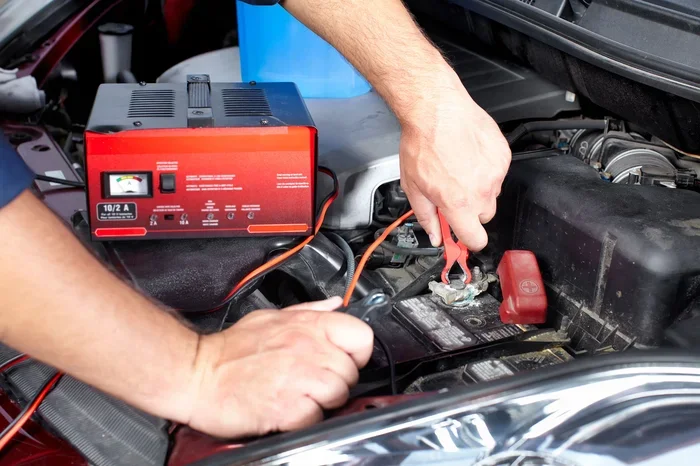
Step 3: Connect the Charger
Make sure the charger is turned off before you connect anything. Then follow this order:
- Connect the red clamp to the positive (+) terminal
- Connect the black clamp to the negative (-) terminal
- Plug the charger into the wall outlet
- Turn the charger on
Never connect the charger to a live circuit. Always attach the clamps before plugging in the charger.
Step 4: Monitor the Charging Process
Check the charger’s display or indicator lights periodically. Most modern chargers will tell you when charging is complete. If your charger does not have an auto-shutoff feature, use a multimeter to check the battery voltage. A fully charged 12-volt battery should read about 12.6 to 12.8 volts.
Step 5: Disconnect Safely
Once charging is complete, turn off the charger first. Then disconnect the clamps in reverse order: black first, then red. This prevents sparking near the battery terminals.
Quick Tip: If you are not going to drive the car right away, drive it for at least 15 to 20 minutes after disconnecting the charger. This gives the alternator a chance to top off the battery.
How the Alternator Charges Your Battery While Driving
You might wonder if just driving your car is enough to recharge a dead battery. The answer is yes, but with some important caveats.
Your car’s alternator is a small generator that converts mechanical energy into electrical energy. It charges the battery while the engine runs and powers all the electrical systems in your car. However, the alternator is not designed to charge a completely dead battery from scratch.
Here is what you should know about alternator charging:
- A short 10-minute drive will only add a small amount of charge
- It takes about 30 minutes of highway driving to recover a partially discharged battery
- A fully dead battery may never fully charge through the alternator alone
- Short trips around town are actually bad for battery health because the alternator never gets enough time to fully recharge
If your battery is dead, it is much more effective to use a dedicated charger first and then drive to top it off. Think of the charger as the main meal and driving as the dessert.
Common Mistakes That Damage Your Car Battery
Even with the best intentions, many car owners make mistakes that shorten their battery’s life. Here are the most common ones and how to avoid them.
Overcharging the Battery
Leaving a charger connected for too long is one of the most common mistakes. Overcharging causes the electrolyte solution inside the battery to heat up and break down. Over time, this leads to permanent capacity loss and eventually a dead battery that will not hold a charge anymore.
Always use a charger with an automatic shutoff or a smart charger that adjusts the charging rate. Never leave a battery unattended on a fast charger for hours without checking it.
Using the Wrong Charger Amperage
Plugging a high-amperage charger into a small or fragile battery is a recipe for disaster. Too much current generates excessive heat, which can warp the battery plates and damage the internal structure. As a general rule, choose a charger that delivers no more than 20% of the battery’s amp hour rating.
For example, a 50-amp hour battery should be charged at 10 amps or less for best results.
Ignoring Corroded Terminals
Corrosion on battery terminals creates resistance that slows down charging and reduces the current that reaches the battery. Before every charging session, take a moment to clean the terminals. A simple mixture of baking soda and water works wonders for removing corrosion.
Letting the Battery Sit Fully Discharged
Lead-acid batteries do not like sitting in a discharged state for long periods. When a battery drops below 50% charge and stays there, the lead sulfate crystals on the plates become harder and more difficult to reverse. This process, called sulfation, can permanently reduce your battery’s capacity.
If you know your car will sit unused for more than two weeks, use a battery maintainer or trickle charger to keep it topped off.
How to Tell If Your Battery Is Fully Charged
Knowing when your battery is fully charged saves you from undercharging or overcharging. There are a few reliable methods to check.
Use a Multimeter
A digital multimeter is the most accurate tool for checking battery voltage. Set it to DC voltage and touch the probes to the battery terminals:
- 12.6V or higher: Fully charged
- 12.4V: About 75% charged
- 12.2V: About 50% charged
- 12.0V: About 25% charged
- Below 11.9V: Nearly dead
Use a Hydrometer (For Maintainable Batteries)
If your battery has removable caps, you can use a hydrometer to measure the specific gravity of the electrolyte in each cell. A reading of 1.265 or higher in all cells indicates a full charge. This method is more advanced but very accurate.
Watch the Charger Indicator
Most modern chargers have built-in indicators that show charging progress. Some display the voltage, while others use LED lights or a simple “done” signal. Always refer to your charger’s manual for specific guidance.
How to Extend Your Car Battery Life
Charging is only one part of battery care. Regular maintenance goes a long way toward keeping your battery strong and reliable for 3 to 5 years or more.
Keep the Terminals Clean
Corrosion buildup is the number one enemy of good electrical connections. Every few months, pop the hood and inspect the terminals. If you see any white or blue-green gunk, clean it with a wire brush and a baking soda solution. After cleaning, apply a thin layer of petroleum jelly or dielectric grease to prevent future corrosion.
Drive Longer Trips When Possible
Short trips around the neighborhood do not give your alternator enough time to fully recharge the battery. Whenever you can, take a longer drive of at least 20 to 30 minutes. This allows the battery to recover and stay healthy.
Turn Off Electronics When the Engine Is Off
Leaving your headlights, radio, or phone charger on while the engine is off drains the battery quickly. Make it a habit to check that everything is turned off before you turn off the ignition.
Test Your Battery Regularly
Most auto parts stores will test your battery for free. Get it checked at least twice a year, especially before winter and summer. Extreme temperatures are the biggest killers of car batteries, and catching a weak battery early gives you time to replace it before you get stranded.
Secure the Battery Properly
A battery that vibrates loose inside its tray can suffer internal damage. Make sure the battery hold-down clamp is tight and the battery sits firmly in place. Excessive vibration causes the plates inside to crack and shed material, which kills the battery prematurely.
When to Replace Your Battery Instead of Charging It
Sometimes charging is not the answer. If your battery is old or damaged, no amount of charging will bring it back to full health. Here are signs that it is time for a replacement.
- The battery is more than 4 years old
- It fails a load test at an auto parts store
- The case is cracked, swollen, or leaking
- It dies frequently even after a full charge
- The terminals are severely corroded and cannot be cleaned
- Your car struggles to start even on warm days
When you do need a new battery, make sure to choose the right size and type for your vehicle. Check your owner’s manual or ask a professional at the parts store. A proper fit and the correct specifications ensure optimal performance and longevity.
Expert Insights on Car Battery Charging
We spoke with several automotive technicians about the most common questions they hear about battery charging. Here is what the experts had to say.
Use a smart charger for daily maintenance. “Most of my customers do not need a fast charger,” says a veteran mechanic with over 15 years of experience. “A good smart charger that maintains the battery at full charge is all most people need. It extends battery life significantly.”
Do not rely on jump starts as a long-term solution. “A jump start gives you enough power to get to a charger, but it does not fully recharge the battery,” the technician adds. “If you keep relying on jump starts without using a proper charger, you are slowly killing the battery.”
Cold weather demands extra attention. “Batteries struggle in freezing temperatures because the chemical reactions slow down,” explains another expert. “If you live in a cold climate, invest in a battery maintainer for the winter months. It makes a huge difference come spring.”
Key Takeaways
- Charging time varies widely: It can take anywhere from 1 hour to 24+ hours depending on your charger type and battery condition.
- Charger amperage is the biggest factor: A 2-amp trickle charger takes much longer than a 40-amp fast charger.
- Smart chargers are the best all-around choice: They charge quickly, safely, and automatically stop when the battery is full.
- Always follow safety procedures: Work in a ventilated area, connect clamps in the right order, and never leave a charger unattended.
- Driving does not fully recharge a dead battery: Use a dedicated charger first, then drive to top it off.
- Regular maintenance prevents problems: Clean terminals, test voltage often, and use a maintainer for idle vehicles.
- Know when to replace: Old, damaged, or frequently dying batteries should be replaced rather than endlessly recharged.
Conclusion
So, how long does it take to fully charge a car battery? The honest answer is that it depends on your situation. A standard charger takes about 4 to 12 hours for a completely dead battery, while a trickle charger might need a full day. A fast charger can do the job in an hour or two, but it requires careful monitoring.
The most important thing you can do is understand your battery and choose the right charging method for your needs. If you want to maintain a battery that sits unused, a trickle charger or battery maintainer is your best friend. If you need a quick boost before a road trip, a smart charger or fast charger gets the job done efficiently.
Take care of your battery and it will take care of you. Keep the terminals clean, test the voltage regularly, and never let it sit fully discharged for too long. These simple habits add years to your battery’s life and save you from the frustration of a dead battery on a bad day.
Now that you know everything about car battery charging times and methods, you are ready to handle any battery situation with confidence. Grab the right charger, follow the safety steps, and keep your battery in top shape. Your future self will thank you the next time you turn the key and hear that engine roar to life.
Frequently Asked Questions
How long does it take to charge a car battery with a 10-amp charger?
With a 10-amp charger, a fully dead standard car battery typically takes about 4 to 6 hours to charge completely. The exact time depends on the battery’s size and condition. Always check the charger’s indicator or use a multimeter to confirm the battery is fully charged before disconnecting.
Can I leave my car battery charger on overnight?
Yes, but only if your charger has an automatic shutoff or is a smart charger. Modern smart chargers detect when the battery is full and stop sending power, making them safe to leave connected overnight. Never leave a basic manual charger running unattended for long periods.
How long should I drive to recharge a dead car battery?
Driving for 20 to 30 minutes at highway speeds gives the alternator enough time to put a meaningful charge back into the battery. However, driving alone usually cannot fully recharge a completely dead battery. It is best to use a charger first and then drive to top it off.
Does cold weather affect car battery charging time?
Yes, cold weather significantly slows down the charging process. Low temperatures make the chemical reactions inside the battery sluggish, which means it takes longer to reach a full charge. If you live in a cold climate, consider using a battery maintainer during the winter months.
How can I tell if my car battery is too old to charge?
If your battery is more than 4 years old and fails to hold a charge after a full charging session, it is likely time for a replacement. Other signs include a swollen case, frequent dying, and difficulty starting even on warm days. A load test at an auto parts store can confirm the battery’s health.
What is the difference between a battery charger and a battery maintainer?
A battery charger delivers a higher amount of current to recharge a dead or low battery quickly. A battery maintainer, also called a trickle charger, provides a very low and steady current designed to keep a battery at full charge over long periods. Use a charger to revive a dead battery and a maintainer to keep a healthy battery in top shape.