Can Old Coolant Cause Engine Overheating And Serious Damage
Yes, old coolant can absolutely cause your engine to overheat and lead to costly damage. Degraded coolant loses its ability to transfer heat, protect metal parts, and prevent freezing. When your cooling system fails, your engine faces risks like a blown head gasket, cracked engine block, and total radiator failure. Regular coolant flushes and proper maintenance keep your vehicle running safely and cool.
Your car’s cooling system works hard every time you turn the key. It keeps your engine from turning into a molten mess of metal and melted seals. But what happens when the fluid that makes all of this possible gets old and tired? The answer is simpler than you might think. Old coolant can absolutely cause engine overheating and serious damage that costs hundreds or even thousands of dollars to fix.
Most drivers don’t think about their radiator fluid until something goes wrong. By then, the damage might already be done. Whether you drive a brand-new sedan or a trusty truck with over 150,000 miles, your cooling system needs attention. In this article, we will break down exactly why old coolant is dangerous, how to spot the warning signs, and what you can do to keep your engine running cool and healthy.
Key Takeaways
- Old coolant loses effectiveness over time: The chemical additives break down, reducing heat transfer and corrosion protection.
- Overheating can cause serious engine damage: A blown head gasket, cracked engine block, and warped cylinder heads are real risks.
- Coolant flush intervals matter: Most vehicles need a coolant change every 30,000 to 60,000 miles or every 2 to 5 years.
- Warning signs are easy to spot: High temperature gauge readings, steam from the hood, and sweet-smelling leaks all signal trouble.
- DIY coolant flush is possible: With the right tools and a step-by-step guide, you can save money on labor costs.
- Prevention is cheaper than repair: Staying on top of cooling system maintenance saves hundreds or even thousands of dollars over time.
📑 Table of Contents
- What Does Coolant Do and Why Does It Go Bad?
- How Old Coolant Causes Engine Overheating
- Warning Signs That Old Coolant Is Damaging Your Engine
- How Often Should You Change Your Coolant?
- Can You Flush Old Coolant Yourself?
- Common Mistakes That Make Coolant Problems Worse
- What Happens If You Ignore Old Coolant?
- How to Choose the Right Coolant for Your Vehicle
- Expert Insights: What Mechanics Say About Old Coolant
- Key Takeaways
- Conclusion
What Does Coolant Do and Why Does It Go Bad?
Coolant, also called antifreeze, is a colored liquid that flows through your engine block and radiator. Its main job is to absorb heat from the engine and carry it away through the radiator. Without coolant, your engine would overheat in minutes on a warm day.
But coolant does more than just carry heat away. It also contains chemical additives that prevent corrosion, lubricate the water pump, and keep the cooling system clean from the inside. Over time, these additives break down. The fluid becomes acidic and loses its protective properties.
The Chemistry Behind Coolant Degradation
When coolant is fresh, it has a balanced pH level. This balance helps it protect metal surfaces inside the cooling system. As the fluid ages, the pH drops and becomes more acidic. Acid eats away at metal components like the radiator, water pump, and engine block from the inside out.
Heat cycles also play a big role. Every time your engine warms up and cools down, the fluid expands and contracts. This constant movement causes the chemical additives to break apart faster. Add road debris, moisture, and tiny particles of metal into the mix, and you have a recipe for degraded fluid that no longer does its job.
The boiling point of old coolant drops significantly too. Fresh coolant mixed with water has a boiling point around 225 degrees Fahrenheit. Old, degraded coolant might boil at much lower temperatures. When coolant boils inside the system, it turns into steam, which cannot transfer heat as effectively. This directly leads to overheating.
How Old Coolant Causes Engine Overheating
Now that we understand why coolant goes bad, let us look at the specific ways it causes your engine to overheat. These are the most common paths to overheating failure, and they are all connected to old fluid.
Reduced Heat Transfer Efficiency
Fresh coolant transfers heat very efficiently. It flows smoothly through narrow passages in the engine block and picks up heat quickly. Old coolant, on the other hand, becomes thick and sluggish. The additives that keep it clean break down, and sludge starts to form inside the cooling passages.
This sludge acts like insulation inside your engine. Instead of flowing freely and pulling heat away, the thick fluid moves slowly and cannot absorb heat fast enough. Your engine runs hotter than it should, and the temperature gauge starts climbing. Many drivers ignore this early warning sign until it is too late.
Corrosion and Scale Buildup
Corrosion is one of the biggest enemies of your cooling system. When the corrosion inhibitors in old coolant wear out, metal surfaces inside the radiator and engine become exposed. Rust forms on the inside of the radiator. Scale builds up on the inside of the engine block.
This buildup narrows the passages that coolant flows through. Less fluid moves through, less heat gets removed, and temperatures rise. In severe cases, corrosion can eat through thin radiator fins or blockages form in the heater core. The result is poor heat exchange and a rapidly overheating engine.
Thermostat and Water Pump Failure
Your thermostat regulates the flow of coolant based on engine temperature. Old coolant with a low pH can corrode the thermostat housing and cause the thermostat to stick. A stuck thermostat means coolant either never flows to the radiator or flows nonstop, both of which cause temperature problems.
The water pump relies on coolant for lubrication. Degraded coolant loses its lubricating properties and can cause the water pump bearings to wear out prematurely. A failing water pump cannot circulate coolant properly, and your engine overheats fast. These are expensive repairs that often happen because of neglected coolant.
Head Gasket Damage
One of the most serious consequences of engine overheating is a blown head gasket. The head gasket sits between the engine block and the cylinder head. It seals the combustion chambers and keeps coolant and oil separate.
When your engine overheats due to old coolant, the metal expands unevenly. This can warp the cylinder head and break the seal of the head gasket. A blown head gasket allows coolant to leak into the combustion chambers, which causes white smoke from the exhaust, loss of power, and further overheating. Repairing a head gasket is one of the most expensive engine jobs because it requires removing the cylinder head.
Warning Signs That Old Coolant Is Damaging Your Engine
Catching the signs of bad coolant early can save you from a major repair bill. Here are the most common symptoms that your cooling system fluid needs attention.
Temperature Gauge Reading High
If your temperature gauge sits higher than normal, especially on warm days or during heavy driving, do not ignore it. A gauge that slowly creeps into the red zone is a clear sign that your cooling system is not working properly. Old coolant is often the culprit.
Steam or Smoke Coming From Under the Hood
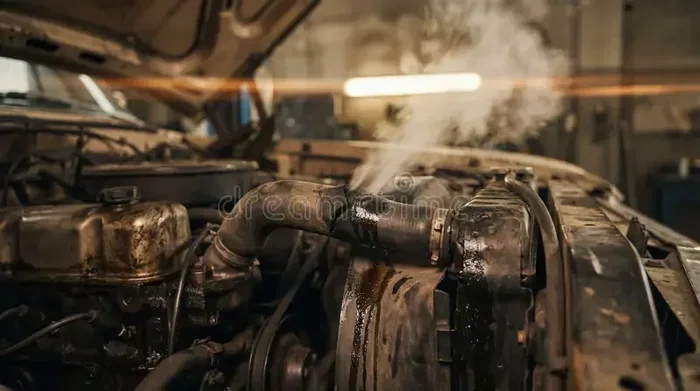
Seeing steam or a sweet-smelling vapor rising from your engine bay is a serious warning. This usually means coolant is boiling inside the system because it is no longer effective. Pull over safely and turn off the engine immediately. Continuing to drive with boiling coolant can cause catastrophic engine damage.
Visible Coolant Leaks
Old coolant becomes corrosive and can eat through rubber hoses, radiator seams, and gaskets. If you notice a puddle of green, orange, or pink fluid under your car, you likely have a coolant leak. Leaks reduce the fluid level in the system, which means less cooling capacity and a higher risk of overheating.
Sweet Smell Inside or Outside the Car
Coolant has a distinct sweet smell that is easy to recognize once you have noticed it. If you smell something sweet inside your cabin, the heater core might be leaking. A sweet smell outside the car could indicate a radiator or hose leak. Either way, get it checked promptly.
Discolored or Sludgy Coolant
Pop the radiator cap (when the engine is completely cool) and look at the fluid. Fresh coolant should be bright and clear. If the fluid looks rusty, brown, or has a thick sludgy texture, it is well past its prime. This is a clear indicator that the cooling system needs a full flush.
How Often Should You Change Your Coolant?
Many drivers wonder how long coolant actually lasts. The answer depends on the type of coolant your vehicle uses and your driving conditions.
Traditional vs. Extended Life Coolant
Traditional green coolant typically needs replacement every 24,000 to 36,000 miles or every two years. Extended life coolants, which are often orange, red, or purple, can last up to 60,000 to 100,000 miles or five years. However, these numbers are just guidelines. Your actual driving conditions matter a lot.
Factors That Shorten Coolant Life
Several factors can cause your coolant to degrade faster than normal:
- Stop-and-go driving in heavy traffic: This keeps your engine at high temperatures for long periods.
- Hot climates: Extreme heat puts extra stress on the cooling system.
- Towing or hauling heavy loads: This makes the engine work harder and generate more heat.
- Old radiator hoses and belts: Worn rubber components can introduce contaminants into the fluid.
- Head gasket leaks: Combustion gases entering the cooling system accelerate fluid breakdown.
Recommended Coolant Flush Intervals by Vehicle Type
Always check your owner’s manual for the manufacturer’s recommended intervals. Here is a general comparison:
- Domestic cars (American): 30,000 to 60,000 miles or every 3 to 5 years.
- Japanese vehicles: 60,000 miles or 5 years for most extended life coolants.
- European vehicles: Often require specific long-life coolants, typically every 60,000 to 100,000 miles.
- Trucks and SUVs: Follow the manufacturer’s recommendation, usually every 50,000 to 60,000 miles.
Can You Flush Old Coolant Yourself?
Yes, you can flush your cooling system at home with basic tools and about one to two hours of your time. A DIY coolant flush saves you money on labor costs and ensures the job is done properly.
What You Will Need
- A drain pan large enough to hold your old coolant
- A socket wrench or pliers to remove the drain plug
- Distilled water for flushing
- New coolant that matches your vehicle’s specifications
- A funnel for filling
- Gloves and safety glasses (coolant is toxic to animals and humans)
Step-by-Step Coolant Flush Process
- Let the engine cool completely. Never work on a hot cooling system. Pressurized hot coolant can cause severe burns.
- Place the drain pan under the radiator drain plug. Open the plug and let the old coolant drain completely.
- Close the drain plug and fill the radiator with distilled water. Start the engine and let it run for 10 to 15 minutes to flush out residual fluid.
- Turn off the engine and let it cool. Drain the water completely from the system.
- Repeat the flush if the water still looks discolored. You want the flush water to come out clear.
- Close the drain plug and fill with fresh coolant. Mix the coolant with distilled water at the ratio specified in your owner’s manual, usually 50/50.
- Bleed the cooling system to remove air pockets. Air pockets can cause localized overheating even with fresh fluid.
- Run the engine and check for leaks. Watch the temperature gauge and make sure it stays in the normal range.
Quick Tips for a Successful DIY Flush
- Always use distilled water. Tap water contains minerals that can form scale inside the cooling system.
- Never mix different types of coolant. Incompatible fluids can form a gel that blocks passages.
- Dispose of old coolant properly. Take it to a recycling center. Coolant is poisonous to pets and wildlife.
- Check the radiator cap seal while you are at it. A worn cap can cause pressure loss and overheating.
Common Mistakes That Make Coolant Problems Worse
Some common habits can make your coolant problems worse or cause them in the first place. Avoiding these mistakes will keep your cooling system in good shape.
Topping Off With Water Instead of Coolant
Many drivers just add plain water when the coolant level drops. While this works as a temporary fix, water has a much lower boiling point and no corrosion protection. Over time, this dilutes the remaining coolant and reduces its effectiveness significantly.
Ignoring Small Leaks
A small coolant leak might seem harmless, but it gets worse over time. Low fluid levels mean less cooling capacity. Even a slow drip can eventually leave you with an empty radiator and an overheating engine on the highway.
Using the Wrong Coolant Type
Not all coolants are the same. Different manufacturers use different chemical formulas. Using the wrong type can cause chemical reactions that form sludge, clog passages, and accelerate corrosion. Always use the coolant type specified in your owner’s manual.
Skipping Coolant Flush Intervals
Some drivers believe that coolant lasts forever if they just keep topping it off. This is a dangerous misconception. The chemical additives deplete over time regardless of how much fluid you add. Skipping scheduled flushes is one of the leading causes of cooling system failure.
What Happens If You Ignore Old Coolant?
Ignoring old coolant is like ignoring a ticking time bomb under your hood. The damage builds slowly at first, but it can become catastrophic in a short time. Here is what can happen if you do not address degraded coolant.
First, the engine runs hotter than normal. This causes increased wear on internal components like pistons, bearings, and cylinder walls. Over time, the excess heat warps metal parts and weakens gaskets and seals.
Next, corrosion spreads throughout the cooling system. The radiator develops pinhole leaks. The water pump starts to weep. The heater core clogs, leaving you with no heat on cold days. Each of these problems costs money to fix, and they all stem from the same root cause: old coolant.
In the worst case, the engine seizes completely. Extreme overheating causes the metal to expand so much that moving parts grind against each other. A seized engine often means a full engine replacement, which can cost several thousand dollars. All of this from a fluid that costs less than $50 to replace.
How to Choose the Right Coolant for Your Vehicle
Not all coolant is created equal. Choosing the right type for your vehicle ensures maximum protection and longevity.
Understanding Coolant Colors and Types
- Green coolant: Traditional formula, typically IAT (Inorganic Additive Technology). Best for older vehicles.
- Orange or red coolant: OAT (Organic Acid Technology). Common in newer vehicles and lasts longer.
- Yellow coolant: HOAT (Hybrid Organic Acid Technology). Combines benefits of IAT and OAT for many modern cars.
- Purple or pink coolant: Also HOAT-based, used by some European manufacturers.
Always Check Your Owner’s Manual
Your vehicle’s owner manual tells you exactly which type of coolant to use. Using the wrong type may void your warranty and cause cooling system problems. When in doubt, ask a trusted mechanic or check with your dealership.
Expert Insights: What Mechanics Say About Old Coolant
Experienced mechanics see the damage caused by old coolant every day. According to most automotive professionals, cooling system neglect is one of the top five causes of overheating-related engine repairs. Many mechanics recommend flushing the cooling system at least once every three years, even if the vehicle has not hit the mileage interval yet.
One common piece of advice from seasoned techs is to test your coolant with a hydrometer or test strips. These inexpensive tools measure the pH level and freezing point of your coolant. If the readings are outside the acceptable range, it is time for a flush. This simple 5-minute test can save you from a major repair bill down the road.
Another tip from the pros is to replace the radiator cap at the same time as your coolant flush. The cap maintains pressure in the cooling system, and a weak cap can cause overheating even with fresh fluid. Most radiator caps cost under $15 and are easy to replace.
Key Takeaways
- Old coolant loses its heat transfer ability: Degraded fluid cannot cool your engine effectively, leading to overheating.
- Corrosion and sludge buildup are major risks: Acidic old coolant eats away at metal parts from the inside.
- Overheating causes expensive damage: Blown head gaskets, warped cylinder heads, and seized engines are all possible outcomes.
- Watch for warning signs: High temperature readings, steam, leaks, and discolored fluid all signal bad coolant.
- Flush intervals matter: Follow your owner’s manual and flush coolant every 2 to 5 years depending on the type.
- DIY flushing is straightforward: With basic tools and about two hours, you can do it yourself and save on labor costs.
- Prevention beats repair every time: Staying on top of coolant maintenance keeps your engine cool and your wallet full.
Conclusion
The answer to the question “can old coolant cause engine overheating” is a definitive yes. Old coolant loses its ability to transfer heat, protect metal surfaces, and keep your cooling system running smoothly. The result is overheating, which can lead to head gasket failure, cracked engine blocks, and other expensive repairs.
The good news is that this is entirely preventable. Regular coolant flushes, watching for warning signs, and using the right type of fluid keep your engine running at the proper temperature. A little maintenance goes a long way toward avoiding major engine damage.
Do not wait until your temperature gauge is in the red. Check your coolant level and condition today. If it has been more than two years since your last flush, schedule a coolant change. Your engine will thank you with years of reliable, cool running. Take care of your cooling system now, and it will take care of you on every drive.
Frequently Asked Questions
Can old coolant cause overheating even if the fluid level looks full?
Yes, absolutely. Old coolant loses its chemical properties even when the fluid level is full. The additives that protect against corrosion and help transfer heat break down over time. The fluid may look full but no longer function properly, which leads to overheating even with adequate fluid volume.
How long can you drive with old coolant before damage occurs?
There is no safe timeline because it depends on the vehicle, driving conditions, and coolant type. Some cars can run on old coolant for months without immediate issues, but the internal corrosion and heat transfer loss are happening continuously. The longer you wait, the higher the risk of serious engine damage.
What color should old coolant be before it becomes dangerous?
Fresh coolant is typically bright green, orange, red, or pink depending on the type. Old coolant turns rusty brown, dark brown, or murky. If the fluid looks discolored or has a sludgy texture, it is well past its useful life and should be flushed immediately.
Is it okay to mix old coolant with new coolant?
It is not recommended. Mixing old and new coolant dilutes the fresh fluid and reduces its effectiveness. The old fluid contains acids and contaminants that can harm the new coolant’s protective additives. A full flush before adding fresh coolant is always the best approach.
Can old coolant damage the water pump?
Yes, old coolant can damage the water pump. Degraded coolant loses its lubricating properties, which causes increased wear on the water pump bearings. Additionally, corrosive old fluid can eat away at the water pump impeller and housing, leading to premature failure and overheating.
How much does a professional coolant flush cost compared to DIY?
A professional coolant flush typically costs between $100 and $200 depending on your vehicle and location. Doing it yourself costs only the price of new coolant, usually $30 to $60. DIY saves you significant money and gives you control over the quality of the work. Just make sure you follow the proper procedure and dispose of old coolant responsibly.