Is There a Fuse to Disable Anti-Theft Systems for Beginners
Yes, most vehicles have a fuse or relay that controls the anti-theft system. Pulling the right fuse can temporarily disable your car alarm or immobilizer, but you need to know which fuse to target and how to do it safely. This guide walks you through every step, from locating your fuse box to avoiding common mistakes that could leave your car unprotected.
You are standing in your driveway. The key is in the ignition. The engine turns over. But your car refuses to start. That little security light on the dashboard keeps flashing. You wonder if there is a fuse to disable anti-theft systems and get your day moving again.
This is a frustrating situation. It happens to thousands of car owners every week. Maybe you bought a used vehicle with a factory alarm still active. Maybe your key fob lost its programming. Or maybe you just want to work on your car without the system beeping at you every five seconds.
The good news is that yes, there is usually a fuse or relay that controls your anti-theft system. Whether you drive a sedan, truck, or SUV, the basic principles remain the same. This guide will walk you through everything you need to know as a beginner. You will learn where to look, what to pull, and how to do it without causing damage.
We will cover factory security systems and aftermarket alarms. We will talk about fuse boxes, relay locations, and the tools you need. By the end, you will feel confident handling this yourself. No mechanic required.
Key Takeaways
- Fuse-based disabling exists: Most cars route anti-theft signals through a specific fuse or relay in the fuse box.
- Know your fuse box: The location varies by vehicle, but it is usually under the dashboard or hood.
- Use the right tools: A fuse puller and your owner manual make the process safe and simple.
- Reset matters: Simply removing a fuse is only half the process; proper reset prevents future issues.
- Aftermarket systems differ: Factory and aftermarket alarms may use different fuses and wiring setups.
- Safety first: Always disconnect the battery before working on any fuse to avoid electrical damage.
📑 Table of Contents
- Understanding Your Car Anti-Theft System
- Is There Really a Fuse to Disable Anti-Theft Systems?
- Where to Find Your Fuse Box
- Tools You Will Need
- Step-by-Step Guide to Pulling the Anti-Theft Fuse
- Common Mistakes to Avoid
- Comparison: Factory vs Aftermarket Anti-Theft Systems
- When to Seek Professional Help
- Preventing Future Anti-Theft Issues
- Final Thoughts
Understanding Your Car Anti-Theft System
Before you open that fuse box, it helps to understand what you are dealing with. Anti-theft systems come in different shapes and sizes. But they all share one goal: preventing unauthorized access to your vehicle.
How Factory Anti-Theft Systems Work
Most modern cars come with a factory-installed immobilizer system. This is a small computer chip embedded in your key or key fob. When you turn the ignition, the car checks if the chip matches its database. If it does not match, the engine will not start.
The security light on your dashboard is the visual indicator. It usually looks like a car with a key inside it. If this light stays on or flashes constantly, the system thinks someone is trying to steal your car.
Factory systems are tied into the car’s main computer, also known as the Engine Control Module or ECM. This means disabling the system is not always as simple as pulling one fuse. But in many cases, it is possible.
How Aftermarket Alarm Systems Work
Aftermarket alarms are different. These are systems you or a previous owner added to the car. They include features like motion sensors, remote start, and sirens. Brands like Viper, Clifford, and Compustar are common examples.
Aftermarket systems are easier to disable because they have their own dedicated wiring. There is usually a control module under the dashboard. And yes, there is almost always a fuse that controls the entire system.
The key difference is that factory systems are deeply integrated into the car’s electronics. Aftermarket systems are more standalone. This makes aftermarket alarms much easier to work with for beginners.
Is There Really a Fuse to Disable Anti-Theft Systems?
Here is the direct answer: yes, in most cases there is a fuse that controls or feeds power to your anti-theft system. However, the exact fuse depends on your vehicle make, model, and year. Some cars use a dedicated fuse. Others route the signal through a relay that sits near the fuse box.
Let us break this down into the two main scenarios you will encounter.
Scenario 1: Dedicated Anti-Theft Fuse
Some vehicles have a clearly labeled fuse for the security system. You can find it in the owner manual or on the fuse box cover. The label might say “ALARM,” “SECURITY,” “ANTI-THEFT,” or “IMMOBILIZER.”
Pulling this fuse cuts power to the entire system. The alarm will not trigger. The immobilizer will not engage. It is the simplest and most direct method.
Scenario 2: Relay-Controlled System
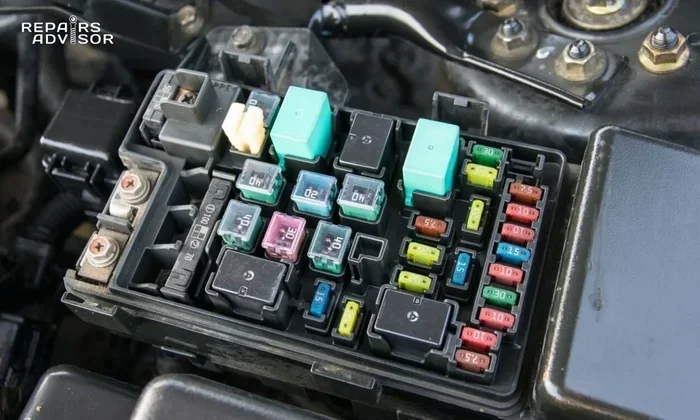
Other vehicles do not have a dedicated fuse. Instead, the anti-theft signal passes through a relay. A relay is an electrical switch controlled by a small current. If you remove the relay, you break the circuit. The system goes offline.
Relays are small, cube-shaped components that plug into the fuse box. They are easy to identify because they click in and out. You can swap them with a similar relay to test if that is your issue.
Where to Find Your Fuse Box
The fuse box location varies from car to car. Most vehicles have more than one fuse box. Knowing where to look is the first step.
Under the Dashboard
The most common location is under the driver’s side dashboard. You will find a panel that pops off or has screws. Inside, you will see a grid of fuses with labels printed on the cover or on the panel itself.
On many Ford, Chevrolet, and Toyota models, the interior fuse box is right below the steering column. You may need to kneel down and look up to see it clearly.
Under the Hood
The second fuse box is usually under the hood, near the battery. This box handles higher-amperage fuses for things like the starter motor, headlights, and cooling fans. Some anti-theft relays live here.
Hood fuse boxes are typically covered by a black plastic lid. The lid often has a diagram printed on the inside. This diagram maps each fuse and relay to its corresponding system.
Other Locations to Check
Some vehicles have fuse boxes in less obvious places. You might find one in the trunk, behind a panel on the passenger side, or even in the engine bay near the firewall. Again, the owner manual is your best friend here.
If you cannot find your manual, search online for a fuse box diagram specific to your vehicle. Many websites and forums offer free PDFs of owner manuals for older cars.
Tools You Will Need
Disabling your anti-theft system with a fuse does not require expensive tools. Here is what you need:
- Fuse puller: A small plastic tool that comes with most fuse boxes. It slides under the fuse and pulls it out safely.
- Owner manual: This contains the fuse box diagram and helps you identify the correct fuse.
- Flashlight: The fuse box can be dark and cramped. A small LED light helps a lot.
- Multimeter (optional): This helps you test if a fuse is blown or if power is flowing through a relay.
- Gloves: Safety first. Electrical components can be sensitive, and gloves protect both you and the car.
You do not need to be a mechanic to do this. The process is straightforward. But you do need patience and attention to detail. Rushing through it can lead to mistakes.
Step-by-Step Guide to Pulling the Anti-Theft Fuse
Now let us get into the practical part. Here is exactly how to disable your anti-theft system using a fuse.
Step 1: Turn Off the Ignition
Make sure the engine is off. Remove the key from the ignition. This prevents any electrical surges while you are working. If your car has a push-button start, make sure it is completely off and the key fob is away from the vehicle.
Step 2: Locate the Fuse Box
Find the appropriate fuse box. Check your owner manual for the exact location. Pull off the cover or remove the screws if needed. Look at the diagram on the inside of the cover or on the panel itself.
Step 3: Identify the Correct Fuse
Look for labels like “ALARM,” “SECURITY,” “ANTI-THEFT,” or “IMMOBILIZER.” The fuse amperage is usually printed next to the label. Common values range from 5 to 20 amps. If you are unsure, trace the wiring or use a multimeter to test for power.
Step 4: Pull the Fuse
Use the fuse puller to gently remove the fuse. Do not use pliers or your fingers. You risk bending the metal contacts inside the fuse box. Once the fuse is out, set it aside in a safe place.
Step 5: Wait and Test
Wait at least 30 seconds after removing the fuse. This gives the car’s computer time to fully reset. Then try to start the car. If the anti-theft system is properly disabled, the security light should turn off and the engine should start normally.
Step 6: Reinsert the Fuse When Done
Once you are finished working on your car, reinsert the fuse in the same slot. Push it in firmly until it clicks into place. Start the car and confirm the security light behaves normally.
Common Mistakes to Avoid
Even simple tasks can go wrong if you are not careful. Here are the most common mistakes beginners make when trying to disable their anti-theft system.
Pulling the Wrong Fuse
This is the number one mistake. Fuse boxes can be confusing. There are often dozens of fuses packed into a small space. If you pull the wrong fuse, you might disable your radio, power windows, or even the fuel pump. Always double-check the label before pulling anything.
Forgetting to Reset the System
After you put the fuse back in, the system may need a reset. In some cars, you need to cycle the ignition on and off three times. In others, you need to lock and unlock the doors with the key fob. Check your owner manual for the specific reset procedure.
Ignoring the Battery
Some anti-theft systems retain power even when the ignition is off. If you are doing more than just pulling a fuse, consider disconnecting the battery first. This prevents accidental shorts and protects your car’s electrical system.
Using Metal Tools
Never use metal tools like screwdrivers or pliers to pull fuses. Metal can short out electrical contacts and cause damage. Always use the plastic fuse puller that came with your car or buy one separately for a few dollars.
Comparison: Factory vs Aftermarket Anti-Theft Systems
Understanding the difference between factory and aftermarket systems helps you know what to expect when disabling them.
| Feature | Factory System | Aftermarket System |
|---|---|---|
| Fuse location | Often integrated with main fuse box | Usually has a dedicated fuse near the control module |
| Ease of disabling | Moderate to difficult | Easy to moderate |
| Reset process | May require key fob reprogramming | Usually just reinsert the fuse |
| Wiring complexity | Deeply integrated with ECM | Standalone wiring harness |
| Cost to disable | Free (DIY) | Free (DIY) |
| Risk of damage | Low to moderate | Low |
As you can see, aftermarket systems are generally easier to work with. Factory systems require more patience and research. But both can be handled at home with the right approach.
When to Seek Professional Help
Not every anti-theft issue can be solved with a fuse pull. Here are situations where you should call a professional locksmith or mechanic.
- The fuse does not exist: Some newer vehicles, especially luxury brands, do not have a simple fuse for the immobilizer. The system is deeply embedded in the car’s computer.
- You need to reprogram the key fob: If your key fob lost its pairing with the car, you may need specialized diagnostic equipment to re-pair it.
- The security light stays on after reset: This could indicate a faulty sensor, a dead key fob battery, or a deeper electrical issue.
- You are uncomfortable working with electrical components: There is no shame in asking for help. A professional can handle this quickly and safely.
Professionals have access to diagnostic scanners that can read error codes from your car’s computer. These tools can pinpoint the exact problem faster than any fuse pull ever will.
Preventing Future Anti-Theft Issues
Once you have resolved your current issue, you probably want to avoid this headache in the future. Here are some tips to keep your anti-theft system working properly without causing frustration.
- Replace key fob batteries regularly: A weak battery in your key fob is one of the most common reasons the anti-theft light comes on unexpectedly. Swap it out every 12 to 18 months.
- Keep a spare key fob: If your primary fob fails, a spare can save you from a lockout situation.
- Do not let the battery die completely: A fully dead car battery can reset the anti-theft system and cause it to malfunction when you reconnect.
- Update your system firmware: Some newer vehicles allow software updates for the security system. Check with your dealer about available updates.
- Store your car in a secure location: Simple as it sounds, keeping your car in a garage or well-lit area reduces the chance of triggering the alarm accidentally.
Final Thoughts
So, is there a fuse to disable anti-theft systems? The answer is yes for the vast majority of vehicles. Whether you drive a compact car or a full-size truck, your security system is powered through a fuse or relay that you can access yourself. The key is knowing where to look and what to do.
Start by consulting your owner manual. Identify the correct fuse box and locate the anti-theft fuse or relay. Use the proper tools and take your time. Avoid the common mistakes we covered, and always reset the system after you are done.
Remember, disabling your anti-theft system should only be a temporary measure. You want your car protected. Once you finish working on your vehicle, put the fuse back in and confirm everything is functioning properly. If you run into issues that you cannot resolve, do not hesitate to reach out to a professional.
Knowledge is power. And now you have the knowledge to handle one of the most common car ownership frustrations on your own. Go ahead and give it a try. You might be surprised how simple it really is.
Frequently Asked Questions
Can pulling the anti-theft fuse damage my car?
No, pulling the correct fuse will not damage your car. It simply cuts power to the security system temporarily. Just make sure you reinsert the fuse after you are done and follow the reset procedure. Using the wrong fuse or using metal tools, however, can cause issues.
What happens if I cannot find the anti-theft fuse in my fuse box?
Some vehicles route the anti-theft signal through a relay instead of a fuse. Check for a relay labeled “SECURITY,” “ALARM,” or “IMMOBILIZER” in the fuse box. If you still cannot find it, consult a mechanic or search for a wiring diagram specific to your vehicle online.
Will disabling the anti-theft system void my car warranty?
Pulling a fuse temporarily does not void your warranty. However, if disabling the system causes damage to other electrical components, that could become an issue. Always reinsert the fuse and reset the system properly after completing your work.
How do I know if my anti-theft system is working after I reinsert the fuse?
Start your car and watch the dashboard. The security light should illuminate briefly when you turn the key and then turn off after a few seconds. If the light stays on or flashes continuously, the system may not have reset properly. Try cycling the ignition on and off a few times.
Is it safe to disable the anti-theft system while working on my car?
Yes, it is safe as long as you take basic precautions. Turn off the ignition, remove the key, and wait a few seconds before pulling the fuse. Work in a dry area and avoid touching exposed wires. If you feel unsure at any point, stop and consult a professional.
Can a dead key fob battery trigger the anti-theft system?
Absolutely. A weak or dead key fob battery is one of the most common reasons the anti-theft light stays on. The car cannot detect the fob’s signal and assumes someone is trying to steal it. Replacing the battery in your key fob often solves this problem instantly.
=== CONCLUSION ===
Disabling your anti-theft system through a fuse is simpler than most people think. You now know where to look, what tools to use, and how to avoid common pitfalls. The process works for both factory systems and aftermarket alarms. With the right approach, you can handle this task in under 15 minutes.
Always start with your owner manual. Identify the correct fuse or relay. Work carefully and methodically. And remember to reset the system when you are finished. These small steps make a big difference in keeping your car secure and your electronics safe.
Share this guide with a friend who is dealing with the same frustrating security light. Knowledge shared is knowledge doubled. And if you ever feel stuck, a professional is just a phone call away. You have got this.