What Code Does a Bad Throttle Position Sensor Cause
A bad throttle position sensor triggers specific diagnostic trouble codes that alert you to voltage and performance issues. The most common codes include P0120, P0121, P0122, P0123, P0220, P0221, P0222, and P0223. Understanding these codes helps you diagnose the problem early and avoid costly repairs or dangerous driving situations.
If your car is acting up and the check engine light is on, a bad throttle position sensor might be the culprit. You may have searched online and landed on this page asking a very specific question: what code does a bad throttle position sensor cause? The answer is more detailed than you might think. Multiple diagnostic trouble codes can pop up depending on the exact nature of the sensor failure. Understanding these codes helps you take the right action quickly and avoid unnecessary trips to the mechanic.
The throttle position sensor plays a big role in how your engine runs. It tells the engine control unit how far the throttle plate is open. When this sensor starts to fail, it sends wrong signals. Your engine then gets the wrong air-fuel mixture. This leads to poor performance, rough idle, and sometimes even dangerous stalling. In this article, we break down every code associated with a bad throttle position sensor. We also cover symptoms, diagnosis, and fixes. By the end, you will know exactly what to look for and what steps to take next.
Key Takeaways
- P0120 and P0121 are the most common TPS codes: They signal circuit malfunctions and range performance problems in the throttle position sensor.
- Low and high input codes (P0122, P0123, P0222, P0223) indicate voltage issues: These mean the sensor is sending too little or too much signal to the engine control unit.
- Common symptoms include rough idle, poor acceleration, and check engine light: Recognizing these early signs can prevent further engine damage.
- A mechanic uses an OBD-II scanner and multimeter to diagnose TPS problems: DIY diagnostics are possible with the right tools and basic knowledge.
- Cleaning the throttle body can sometimes fix minor TPS issues: But a faulty sensor usually requires full replacement for a permanent fix.
- Regular maintenance helps prevent throttle position sensor failure: Simple habits like air filter changes and clean fuel go a long way.
📑 Table of Contents
- Understanding the Throttle Position Sensor and Its Role
- What Code Does a Bad Throttle Position Sensor Cause
- Symptoms of a Bad Throttle Position Sensor
- How Mechanics Diagnose a Faulty Throttle Position Sensor
- Fixing a Bad Throttle Position Sensor
- Preventing TPS Problems in the Future
- Key Takeaways
- Conclusion
Understanding the Throttle Position Sensor and Its Role
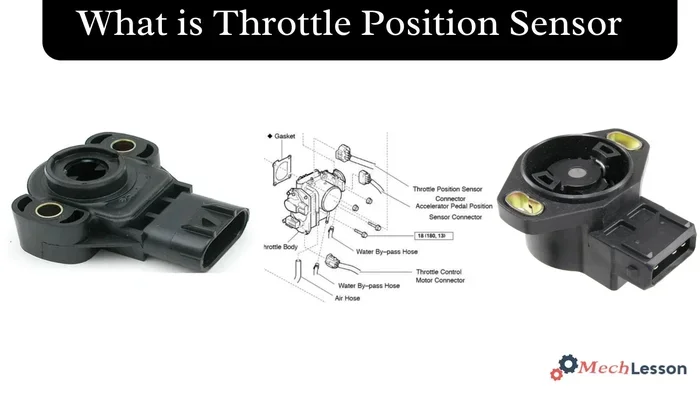
The throttle position sensor is a small but important part of your vehicle’s engine management system. It sits on the throttle body and monitors the position of the throttle plate. The throttle plate controls how much air flows into the engine. When you press the accelerator pedal, the throttle plate opens wider. The sensor sends a voltage signal to the powertrain control module based on how far the plate is open.
How the TPS Works
Think of the throttle position sensor as a messenger. When you step on the gas, the throttle plate opens. The sensor reads this movement and sends a voltage signal to the engine control unit. The ECU then decides how much fuel to inject based on that signal. If the sensor sends the wrong voltage, the ECU makes wrong fuel decisions. This is why a failing TPS causes so many driving problems.
Most vehicles use a three-wire sensor. One wire carries the reference voltage from the ECU. Another wire carries the signal voltage back. The third wire provides a ground connection. When the throttle plate moves, the sensor changes its resistance. This changes the voltage signal. The ECU reads this change and adjusts the fuel delivery accordingly.
Why the TPS Matters for Engine Performance
A properly working throttle position sensor ensures smooth acceleration and steady idle. It helps the engine maintain the correct air-fuel ratio at all times. Without accurate TPS data, the ECU cannot properly manage the engine. This affects everything from fuel economy to emissions. A failing sensor can trigger a rich or lean condition. Both of these can cause long-term engine damage if left unchecked.
The sensor also plays a role in cruise control and transmission shifting. Many automatic transmissions rely on TPS input to determine when to shift gears. A bad sensor can cause late or harsh shifts. It can also disable cruise control entirely. This is why addressing TPS issues early saves you from bigger problems down the road.
What Code Does a Bad Throttle Position Sensor Cause
Now let us get to the heart of the matter. A bad throttle position sensor causes several diagnostic trouble codes. These codes are part of the OBD-II system, which monitors your vehicle’s emissions and performance. When the ECU detects a problem with the TPS signal, it stores a code and turns on the check engine light.
Common DTCs Linked to a Failing TPS
The specific code depends on what is wrong with the sensor. Here are the most common codes you will see:
- P0120: Throttle Position Sensor Circuit A Malfunction
- P0121: Throttle Position Sensor Circuit A Range/Performance
- P0122: Throttle Position Sensor Circuit A Low Input
- P0123: Throttle Position Sensor Circuit A High Input
- P0220: Throttle Position Sensor Circuit B Malfunction
- P0221: Throttle Position Sensor Circuit B Range/Performance
- P0222: Throttle Position Sensor Circuit B Low Input
- P0223: Throttle Position Sensor Circuit B High Input
Codes starting with P0120 and P0121 relate to the primary sensor signal, often called Sensor A. Codes starting with P0220 and P0221 relate to the secondary sensor, called Sensor B. Many modern vehicles have two TPS sensors built into one unit. They provide redundant signals for safety. If either sensor fails, a code gets stored.
What Each Code Means
Let us break down what each of these codes actually means for your vehicle.
P0120 (TPS Circuit A Malfunction): This code means the ECU has detected a problem with the electrical circuit of the primary TPS. It could be a wiring issue, a loose connector, or a faulty sensor. The signal from Sensor A is outside the expected range.
P0121 (TPS Circuit A Range/Performance): This code indicates that the TPS signal does not match the expected range for the throttle position. The sensor might be worn out or the throttle body might have carbon buildup. The ECU sees that the voltage does not change smoothly as the throttle opens and closes.
P0122 (TPS Circuit A Low Input): This means the voltage signal from Sensor A is too low. The ECU expects a minimum voltage when the throttle is closed. If the signal drops below that threshold, this code appears. A bad ground wire or a failing sensor often causes this.
P0123 (TPS Circuit A High Input): This is the opposite of P0122. The voltage signal is too high. When the throttle is closed, the ECU expects a specific voltage. If the signal exceeds that value, the ECU stores this code. A short circuit or a faulty sensor can cause this issue.
P0220 through P0223: These codes are the same as the P0120 series but apply to Sensor B. They follow the same pattern. P0220 is a circuit malfunction, P0221 is a range/performance issue, P0222 is a low input, and P0223 is a high input. These codes are less common because they only appear if your vehicle has a dual TPS setup.
Symptoms of a Bad Throttle Position Sensor
Codes do not always appear right away. Sometimes the sensor degrades slowly. You might notice driving symptoms before a code gets stored. Knowing these signs helps you catch the problem early.
Driving Symptoms to Watch For
- Rough idle: The engine shakes or RPMs fluctuate when stopped at a light. This happens because the ECU cannot properly meter fuel without accurate TPS data.
- Poor acceleration: You press the gas pedal and the vehicle hesitates or responds slowly. The ECU might cut fuel temporarily if it receives a confusing signal.
- Engine stalling: The engine dies unexpectedly, especially at idle or low speeds. A bad TPS can cause the ECU to deliver too little or too much fuel.
- Surging or hesitation: The vehicle surges forward unexpectedly or bucks during acceleration. This is a classic sign of an inconsistent TPS signal.
- Reduced fuel economy: A failing sensor can cause the engine to run rich, burning more fuel than necessary.
- Transmission shifting issues: The transmission shifts late, harshly, or enters limp mode. Many vehicles use TPS input for shift point decisions.
Dashboard Warning Signs
The check engine light is the most obvious warning sign. But you might also notice other indicators. Some vehicles show a reduced power mode. The engine light may flash in severe cases. If you notice any of these symptoms combined with a check engine light, get the codes read as soon as possible. Ignoring these warnings can lead to more serious engine and transmission damage.
How Mechanics Diagnose a Faulty Throttle Position Sensor
Diagnosing a bad TPS involves a few straightforward steps. A mechanic will use both electronic tools and manual testing. Here is how the process typically works.
Using an OBD-II Scanner
The first step is connecting an OBD-II scanner to the diagnostic port. This port is usually located under the dashboard on the driver’s side. The scanner reads the stored codes and live data. A mechanic will look for the specific TPS codes we discussed earlier. They will also check the live TPS data stream to see if the voltage signal changes smoothly as the throttle opens and closes.
A healthy TPS sensor shows a gradual voltage change from about 0.5 volts at closed throttle to around 4.5 volts at wide-open throttle. If the voltage jumps or drops suddenly, the sensor is likely faulty. If the voltage stays flat regardless of throttle position, the sensor has completely failed.
Testing the TPS with a Multimeter
After reading the codes, a mechanic will often test the sensor with a digital multimeter. This provides a direct voltage reading from the sensor’s signal wire. The technician back-probes the connector and watches the voltage as they slowly open the throttle. Any dead spots, erratic jumps, or open circuits indicate a bad sensor.
They also check the reference voltage and ground. The ECU should supply about 5 volts to the sensor. If the reference voltage is missing, the problem might be in the wiring or the ECU itself, not the sensor. This is why proper diagnosis matters. Replacing the sensor without checking the circuit can waste money.
Visual Inspection
A good mechanic also performs a visual inspection. They check the connector for corrosion or bent pins. They look at the wiring harness for frayed or damaged wires. Sometimes the problem is a loose connection, not the sensor itself. A simple repair to the wiring can clear the code without replacing any parts.
Fixing a Bad Throttle Position Sensor
Once you have confirmed the TPS is the problem, it is time to fix it. The solution depends on the severity of the issue.
Can You Clean or Repair a TPS?
In some cases, cleaning the throttle body and the sensor can resolve minor issues. Carbon buildup around the throttle plate can interfere with the sensor’s readings. A throttle body cleaner and a soft cloth can remove this buildup. After cleaning, you may need to reset the codes and perform an idle relearn procedure.
However, if the sensor has a dead spot, erratic signal, or internal electrical failure, cleaning will not help. The sensor must be replaced at that point. There is no reliable way to repair an internal TPS failure. Replacement is the only permanent fix.
When Replacement Is Necessary
Replacing a throttle position sensor is usually straightforward. The sensor is mounted to the throttle body with one or two bolts. You disconnect the electrical connector, remove the old sensor, and install the new one. In many cases, no special tools are needed beyond a basic socket set and a screwdriver.
After installation, you should clear the codes with an OBD-II scanner. Some vehicles require an idle relearn procedure. This teaches the ECU the baseline throttle position again. You can usually find the relearn steps in the vehicle service manual or online. Taking the time to do this properly prevents rough idle and other issues after the repair.
Replacement costs are generally reasonable. A TPS sensor itself costs between $20 and $100 depending on the vehicle. Labor costs are low since the job is simple. Most mechanics can complete the replacement in under an hour. If you are handy, you can do it yourself and save on labor charges.
Preventing TPS Problems in the Future
You cannot prevent all sensor failures. Electrical components wear out over time. But you can take steps to extend the life of your throttle position sensor and avoid premature failure.
- Keep the throttle body clean: Regular cleaning prevents carbon buildup that can interfere with sensor operation. Include this in your routine maintenance schedule.
- Check your air filter: A clogged air filter allows more debris into the throttle body. This accelerates carbon deposits and can affect the sensor.
- Use quality fuel: Clean fuel reduces carbon buildup throughout the engine. This includes the throttle body and intake components.
- Address check engine lights promptly: Ignoring warning lights allows problems to worsen. A small issue with the TPS circuit can become a major sensor failure if left unchecked.
- Inspect connectors during regular service: Corrosion on electrical connectors is a common cause of sensor codes. A quick inspection can catch this early.
Taking these simple steps can save you from unexpected breakdowns and expensive repairs. Prevention is always cheaper than cure, and the same applies to your vehicle’s sensors and electrical components.
Key Takeaways
A bad throttle position sensor causes specific diagnostic trouble codes that alert you to voltage and performance issues. The most common codes include P0120, P0121, P0122, P0123, P0220, P0221, P0222, and P0223. Understanding these codes helps you diagnose the problem early and avoid costly repairs or dangerous driving situations. The symptoms like rough idle, poor acceleration, and check engine light should never be ignored. Prompt diagnosis using an OBD-II scanner and multimeter leads to the right fix. Whether you need a simple cleaning or a full replacement, addressing the issue quickly keeps your engine running smoothly and your wallet happy.
Conclusion
So, what code does a bad throttle position sensor cause? As we have covered, the answer involves several diagnostic trouble codes ranging from P0120 to P0223. Each code tells a different story about what is wrong with the sensor or its circuit. Whether it is a low voltage signal, a high voltage signal, or a circuit malfunction, the ECU has a specific code for each scenario. Recognizing these codes and understanding their meaning puts you in a much better position to address the problem.
The symptoms of a failing TPS are hard to ignore. Rough idle, poor acceleration, stalling, and surging all point to a sensor that is not doing its job. Combined with a check engine light, these signs should prompt you to get the codes read right away. A simple OBD-II scanner can reveal the problem in minutes. From there, a multimeter test confirms whether the sensor itself is at fault or if the issue lies in the wiring or connectors.
Fixing a bad throttle position sensor is usually a quick and affordable repair. Cleaning the throttle body can help in minor cases, but most failures require sensor replacement. The good news is that this is a straightforward job that most DIYers can handle. Even if you take it to a mechanic, the cost is reasonable and the repair time is short. By staying on top of routine maintenance and addressing warning signs early, you can keep your throttle position sensor and your engine in great shape for years to come.
Do not ignore the check engine light. Do not dismiss rough idle or hesitation as minor quirks. These are your vehicle’s way of telling you something needs attention. The throttle position sensor is a small component with a big impact. Take care of it, and your car will reward you with smooth, reliable performance every time you hit the road.
Frequently Asked Questions
Can I drive my car with a bad throttle position sensor?
You can drive short distances with a failing TPS, but it is not recommended. A bad sensor can cause stalling, poor acceleration, and unpredictable engine behavior. These issues can be dangerous, especially in traffic or at highway speeds. Get the problem diagnosed and fixed as soon as possible to avoid putting yourself and others at risk.
How much does it cost to replace a throttle position sensor?
The total cost typically ranges from $100 to $200. The sensor itself costs between $20 and $100, and labor takes less than an hour at most shops. Some vehicles make the sensor harder to access, which can increase labor time. Always get a quote from your mechanic before proceeding with the repair.
Can a dirty throttle body cause TPS codes?
Yes, carbon buildup around the throttle body can interfere with the sensor’s readings. This can trigger codes like P0121 or P0122 even if the sensor itself is working fine. Cleaning the throttle body and the sensor contact area often resolves these codes without needing a replacement.
What is the difference between TPS Sensor A and Sensor B?
Many modern vehicles have two TPS sensors in one unit. Sensor A is the primary signal, and Sensor B is the secondary or redundant signal. They provide different voltage ranges for the same throttle position. The ECU compares both signals to detect faults. If either sensor fails, a corresponding code gets stored.
Will a bad TPS cause a vehicle to fail an emissions test?
Yes, a failing throttle position sensor can cause a vehicle to fail an emissions test. The wrong air-fuel mixture leads to increased emissions. The check engine light itself is also an automatic fail in most emissions testing programs. Fixing the TPS issue before testing will help you pass.
Can I reset the check engine light after replacing the TPS?
Yes, you can reset the light after replacing the sensor. Use an OBD-II scanner to clear the stored codes. However, if the underlying problem is not fully resolved, the code will return. Make sure the new sensor is properly installed and that the idle relearn procedure has been completed before assuming the fix is done.