What Is the MPG of Hydrogen and Can It Replace Gasoline
What Is the MPG of Hydrogen and how does it compare to gasoline? Hydrogen fuel cell vehicles deliver impressive hydrogen fuel efficiency with around 60 to 70 MPGe, far surpassing most gasoline cars. Understanding hydrogen fuel economy helps drivers evaluate whether hydrogen vehicles are a viable gasoline replacement for everyday use.
Most drivers have heard the buzz around alternative fuels and clean energy vehicles. But one question keeps popping up: What Is the MPG of Hydrogen? Whether you are curious about hydrogen fuel efficiency or considering a hydrogen vehicle, understanding the numbers matters.
The truth is, hydrogen fuel economy is not as straightforward as pumping gas at the station. It depends on the type of engine, the hydrogen production method, and the vehicle design. In this guide, we will break down everything you need to know about hydrogen fuel economy and whether hydrogen can realistically replace gasoline.
We will walk you through the science, the numbers, and the real-world factors that affect hydrogen fuel efficiency. By the end, you will have a clear picture of where hydrogen stands as a gasoline replacement and what the future might hold.
Key Takeaways
- Hydrogen fuel efficiency is measured in MPGe, with most fuel cell vehicles achieving 60 to 70 MPGe
- Hydrogen vs gasoline shows hydrogen wins on emissions but lags on infrastructure and cost
- Green hydrogen production is the key to making hydrogen a truly clean energy source
- Hydrogen refueling stations are still limited, which limits widespread hydrogen vehicle adoption
- Hydrogen fuel cells offer faster refueling times compared to electric batteries
- Hydrogen cost per mile is currently higher than gasoline in most regions
- The future of hydrogen fuel depends on infrastructure investment and production scale
📑 Table of Contents
- What Is the MPG of Hydrogen: Understanding the Basics of Hydrogen Fuel
- How Hydrogen Fuel Cells Power Vehicles
- Hydrogen MPG vs Gasoline MPG: A Head-to-Head Comparison
- Can Hydrogen Fuel Truly Replace Gasoline?
- The Advantages and Disadvantages of Hydrogen as a Fuel
- What the Future Holds for Hydrogen Fuel
- Conclusion: Is Hydrogen Ready to Replace Gasoline?
What Is the MPG of Hydrogen: Understanding the Basics of Hydrogen Fuel
Before we dive into the numbers, let us clarify what MPG means in the context of hydrogen. Traditional MPG stands for miles per gallon. But hydrogen is not a liquid you pour into a tank. So how do we measure it?
What Does MPG Actually Measure?
MPG measures how far a vehicle can travel on a unit of fuel. For gasoline, this is simple. One gallon of gas takes you a certain number of miles. For hydrogen, the measurement changes slightly. Instead of gallons, we use kilograms of hydrogen gas.
But to make comparisons fair, the industry uses a metric called miles per gallon equivalent, or MPGe. This standard allows us to compare hydrogen vs gasoline on the same playing field. One gallon of gasoline contains about 33.7 kilowatt-hours of energy. One kilogram of hydrogen contains roughly 33.3 kilowatt-hours. So the energy content is nearly identical.
This means when you see a hydrogen vehicle rated at 65 MPGe, it is traveling 65 miles on the same amount of energy as one gallon of gasoline would provide. This is a crucial concept for understanding hydrogen fuel efficiency.
Miles Per Gallon Equivalent (MPGe) Explained
MPGe is the standard rating used by the EPA for vehicles that do not run on traditional liquid fuel. It applies to fuel cell vehicles and battery electric vehicles alike. Here is how it works:
- Gasoline vehicles are rated in traditional MPG based on liquid fuel consumption
- Hydrogen vehicles are rated in MPGe based on hydrogen consumption
- Battery electric vehicles are rated in MPGe based on electricity consumption
The MPGe rating takes into account the full energy conversion process. For hydrogen, this includes how the fuel cell converts hydrogen into electricity, which then powers the motor. No energy conversion is 100% efficient, and hydrogen fuel cells are no exception.
Understanding MPGe helps you make fair comparisons. It is the best way to answer the question, What Is the MPG of Hydrogen, in a meaningful way.
How Hydrogen Fuel Economy Is Calculated
Hydrogen fuel economy is calculated by measuring how many miles a vehicle can travel per kilogram of hydrogen consumed. The EPA tests vehicles under controlled conditions to determine this rating.
Here is a simplified look at the calculation process:
- The vehicle is driven on a standardized test cycle
- The amount of hydrogen consumed is measured in kilograms
- The distance traveled is divided by the hydrogen consumed
- The result is converted to MPGe for easy comparison
Several factors affect the final hydrogen fuel efficiency number. Driving habits, temperature, terrain, and vehicle weight all play a role. A heavy vehicle driving in cold weather will typically show lower fuel economy than a lighter vehicle in mild conditions.
Quick Tips
- Always compare MPGe ratings using the same testing standard
- Real-world hydrogen fuel economy may vary from EPA ratings by 10 to 20 percent
- Keep your hydrogen vehicle tires properly inflated to maximize efficiency
- Aggressive driving reduces hydrogen fuel efficiency just like it does for gasoline cars
How Hydrogen Fuel Cells Power Vehicles
To truly understand hydrogen fuel efficiency, you need to know how hydrogen fuel cells work. The technology is fascinating and quite different from a traditional hydrogen combustion engine.
The Science Behind Fuel Cell Technology
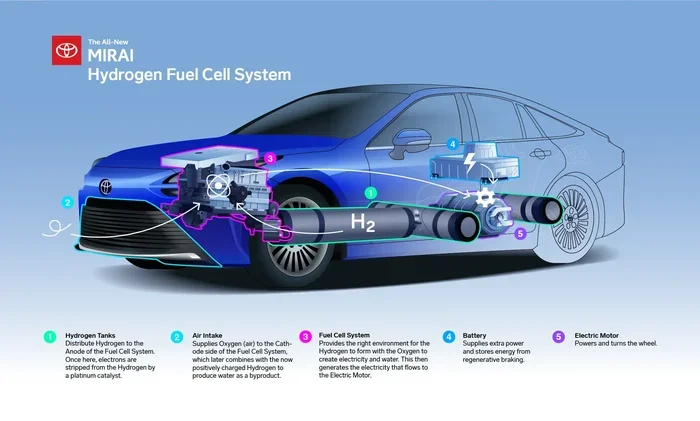
A fuel cell vehicle uses a hydrogen fuel cell stack to generate electricity on board. Here is the basic process in simple terms:
- Hydrogen gas is stored in a high-pressure tank
- The gas flows into the fuel cell stack
- Inside the stack, hydrogen molecules split into protons and electrons
- The electrons flow through a circuit, creating electricity
- The electricity powers an electric motor
- The only emission is water vapor
This process is called energy conversion, and it is remarkably efficient. A hydrogen fuel cell converts about 40 to 60 percent of the hydrogen’s energy into usable electricity. Compare that to a gasoline engine, which converts only about 20 to 30 percent of gasoline energy into motion.
This is one of the biggest advantages of hydrogen fuel cells. The energy conversion rate is significantly higher, which directly contributes to better hydrogen fuel efficiency.
Hydrogen Vehicle Types and Their Efficiency
Not all hydrogen vehicles are created equal. There are two main types that use hydrogen as fuel:
- Fuel Cell Electric Vehicles (FCEVs) – These use hydrogen fuel cells to generate electricity. The Toyota Mirai and Hyundai Nexo are popular examples. They offer the best hydrogen fuel efficiency because the fuel cell process is highly efficient.
- Hydrogen Combustion Engine Vehicles – These burn hydrogen in an internal combustion engine, similar to how gasoline engines work. They are less efficient than FCEVs but can use existing engine manufacturing infrastructure.
FCEVs generally deliver better hydrogen fuel economy than combustion engine versions. If you are asking What Is the MPG of Hydrogen, the answer depends heavily on which type of vehicle you are looking at.
Expert Insights
According to the U.S. Department of Energy, fuel cell vehicles typically achieve about twice the energy efficiency of conventional internal combustion engines. This makes hydrogen fuel cells one of the most promising pathways for clean energy transportation.
Hydrogen MPG vs Gasoline MPG: A Head-to-Head Comparison
Now for the numbers people want to see. How does hydrogen fuel efficiency actually compare to gasoline? Let us break it down with real data and a direct comparison.
Direct Comparison: Hydrogen vs Gasoline MPG
Here is a side-by-side look at popular vehicles and their fuel economy ratings:
| Vehicle Type | Fuel Type | Fuel Economy Rating | Annual Fuel Cost (Estimate) |
|---|---|---|---|
| Toyota Mirai (FCEV) | Hydrogen | ~65 MPGe | ~$1,100 |
| Hyundai Nexo (FCEV) | Hydrogen | ~60 MPGe | ~$1,200 |
| Toyota Camry (Gas) | Gasoline | ~32 MPG | ~$1,800 |
| Honda Civic (Gas) | Gasoline | ~36 MPG | ~$1,600 |
| Ford F-150 (Gas) | Gasoline | ~22 MPG | ~$2,600 |
The hydrogen vs gasoline comparison shows that hydrogen fuel cell vehicles win on efficiency. A hydrogen vehicle rated at 65 MPGe is significantly more efficient than most gasoline cars on the market.
Why the Numbers Differ
You might wonder why a hydrogen vehicle gets a higher rating than a gasoline car. The answer lies in the energy conversion process. Gasoline engines waste a lot of energy as heat. Only about one-third of the energy in gasoline actually moves the car.
Hydrogen fuel cells waste far less energy. They convert a larger percentage of the fuel’s energy into motion. This is why hydrogen fuel efficiency numbers look so impressive on paper.
However, there is a catch. The total fuel economy picture must include how the hydrogen is produced. If the hydrogen production process is energy-intensive, the overall efficiency drops.
Common Mistakes
- Comparing raw MPGe to MPG without understanding the difference – MPGe and MPG measure different things, even though the numbers look similar
- Ignoring the production source – Not all hydrogen is created equal. Green hydrogen from renewable sources is far more efficient than hydrogen from fossil fuels
- Overlooking refueling availability – High hydrogen fuel efficiency means little if you cannot find a hydrogen refueling station
Can Hydrogen Fuel Truly Replace Gasoline?
This is the billion-dollar question. Can hydrogen fuel realistically serve as a gasoline replacement? The answer is complicated and depends on several factors.
The Current State of Hydrogen Infrastructure
Right now, hydrogen refueling stations are limited. Most are concentrated in California and a few other select areas. If you live outside these regions, finding a place to refuel a hydrogen vehicle can be a real challenge.
Compare this to gasoline stations, which are everywhere. You can drive almost anywhere in the country and find a gas station within a few miles. This hydrogen infrastructure gap is one of the biggest barriers to widespread adoption.
Building new hydrogen refueling stations is expensive. The stations cost millions of dollars each. Until the network expands significantly, hydrogen will remain a niche fuel for most drivers.
Cost Per Mile: Hydrogen vs Gasoline
Hydrogen cost per mile is another critical factor. Currently, hydrogen fuel is more expensive per mile than gasoline in most areas. A kilogram of hydrogen costs around $13 to $16 at the pump. Most fuel cell vehicles use about 0.6 to 0.8 kilograms per 100 miles.
Let us do the math:
- Hydrogen: 0.7 kg per 100 miles times $14 per kg = $0.98 per mile
- Gasoline: 30 MPG times $3.50 per gallon = $0.12 per mile
As you can see, the hydrogen cost per mile is currently much higher than gasoline. This is a major hurdle for hydrogen as a gasoline replacement.
However, costs are expected to drop as hydrogen production scales up and green hydrogen technology improves. Some experts predict that hydrogen fuel could become competitive with gasoline within the next decade.
Environmental Impact and Green Hydrogen
One of the strongest arguments for hydrogen is its environmental benefit. Fuel cell vehicles produce zero tailpipe emissions. The only output is water vapor.
But the full picture depends on how the hydrogen is made. There are different colors of hydrogen:
- Green hydrogen – Produced using renewable energy like wind or solar. This is the cleanest option and the future of clean energy transportation.
- Grey hydrogen – Produced from natural gas without carbon capture. This still creates carbon emissions.
- Blue hydrogen – Produced from natural gas with carbon capture and storage. Better than grey, but not as clean as green.
For hydrogen to truly be a clean energy solution, the industry needs to shift toward green hydrogen production. Until then, the environmental benefits are limited.
Quick Tips
- Look for vehicles that use green hydrogen when possible
- Check if your region has renewable hydrogen production facilities
- Consider the full lifecycle emissions, not just tailpipe emissions
- Stay informed about hydrogen infrastructure developments in your area
The Advantages and Disadvantages of Hydrogen as a Fuel
Every fuel has pros and cons. Hydrogen is no exception. Let us take a balanced look at what makes hydrogen fuel appealing and where it falls short.
Advantages of Hydrogen Fuel
- Zero tailpipe emissions – Fuel cell vehicles emit only water vapor, making them excellent for urban air quality
- Fast refueling – Filling up a hydrogen tank takes about 5 minutes, similar to gasoline. This is much faster than charging an electric battery
- Long range – Most hydrogen vehicles offer 300 to 400 miles of range on a single tank
- High energy density – Hydrogen contains more energy per unit of weight than gasoline, which is great for heavy-duty applications
- Versatile fuel source – Hydrogen can be produced from many sources, including water, natural gas, and biomass
Disadvantages of Hydrogen Fuel
- Limited infrastructure – Hydrogen refueling stations are scarce outside of select markets
- High fuel costs – Hydrogen cost per mile remains significantly higher than gasoline
- Production challenges – Most hydrogen today is produced from fossil fuels, not renewable sources
- Storage difficulties – Hydrogen must be stored at extremely high pressures, which adds cost and complexity
- Lower well-to-wheel efficiency – When you account for production and delivery, overall efficiency can be lower than battery electric vehicles
Common Mistakes
- Assuming all hydrogen is green – Most hydrogen today is grey or brown. Always ask about the production method
- Overlooking total cost of ownership – Hydrogen vehicles often have higher purchase prices and fuel costs than comparable gasoline cars
- Ignoring availability – If you cannot easily refuel, high hydrogen fuel efficiency does not matter
What the Future Holds for Hydrogen Fuel
The future of hydrogen fuel is uncertain but promising. Several trends suggest that hydrogen could play a bigger role in transportation over the coming decades.
Government Support and Investment
Governments around the world are investing heavily in hydrogen infrastructure. The U.S. Inflation Reduction Act includes significant tax credits for clean hydrogen production. Europe and Asia are also pouring billions into hydrogen development programs.
This investment could accelerate the buildout of hydrogen refueling stations and bring down the cost of green hydrogen. As infrastructure grows, more drivers may consider hydrogen vehicles as a practical choice.
The Role of Hydrogen in Heavy-Duty Transport
While passenger cars remain challenging for hydrogen, heavy-duty transport looks promising. Semi-trucks, buses, and delivery vehicles benefit from hydrogen’s fast refueling and long range. Companies like Nikola and Hyundai are already testing hydrogen fuel cell trucks on commercial routes.
In these applications, hydrogen fuel efficiency and quick refueling times give hydrogen a clear advantage over battery electric alternatives. This could be where hydrogen as a gasoline replacement finds its first major success.
Expert Insights
Industry analysts predict that hydrogen fuel cells will first achieve mass adoption in commercial fleets and public transit before becoming mainstream in personal vehicles. The hydrogen infrastructure buildout will likely follow a hub-and-spoke model, starting in dense urban areas and major highways.
Key Takeaways for Consumers
If you are considering a hydrogen vehicle, here is what you should keep in mind:
- Check whether hydrogen refueling stations exist in your area and along your regular routes
- Compare the total cost of ownership, including fuel, maintenance, and purchase price
- Understand that hydrogen fuel efficiency is excellent on paper but real-world results may vary
- Stay updated on green hydrogen production developments in your region
- Consider whether the fast refueling advantage outweighs the higher fuel costs for your driving habits
Conclusion: Is Hydrogen Ready to Replace Gasoline?
So, can hydrogen replace gasoline? The answer is both yes and no. What Is the MPG of Hydrogen and the numbers are impressive. Hydrogen fuel cell vehicles deliver strong efficiency with 60 to 70 MPGe, outperforming most gasoline cars on paper. But the real-world picture is more complex. Hydrogen fuel efficiency is excellent, yet high fuel costs and limited hydrogen infrastructure remain major hurdles.
Hydrogen is not ready to fully replace gasoline today, but it is a strong contender for the future. As green hydrogen production grows and hydrogen refueling stations become more common, hydrogen fuel could become a practical gasoline replacement for many drivers. The key is staying informed, understanding the trade-offs, and watching how the industry evolves.
For now, hydrogen is best viewed as a complement to other alternative fuels rather than a full replacement. It shines in applications where fast refueling and long range matter most. And as the world moves toward zero emissions transportation, hydrogen will likely play an important supporting role.
If you are curious about hydrogen fuel efficiency, the best step is to stay informed. Test drive a hydrogen vehicle if you have access to one. Compare the numbers to your current gasoline setup. And keep an eye on how the hydrogen infrastructure evolves in your community.
The future of transportation is not going to be solved by a single fuel. It will take a mix of solutions, and hydrogen fuel is an important piece of that puzzle. Understanding What Is the MPG of Hydrogen gives you the knowledge to make informed decisions about your next vehicle and your role in the clean energy transition.
Frequently Asked Questions
What is the average MPG of a hydrogen fuel cell vehicle?
Most fuel cell vehicles on the market today achieve between 60 and 70 MPGe. The Toyota Mirai and Hyundai Nexo are among the most popular models, with ratings around 65 and 60 MPGe respectively. These numbers are significantly higher than most gasoline vehicles, which is one reason hydrogen fuel efficiency generates so much interest.
Is hydrogen cheaper than gasoline per mile?
Currently, no. Hydrogen cost per mile is higher than gasoline in most regions. A kilogram of hydrogen costs around $13 to $16, and most vehicles use about 0.6 to 0.8 kilograms per 100 miles. This works out to roughly $0.98 per mile for hydrogen compared to about $0.12 per mile for gasoline. However, experts expect hydrogen costs to decrease as green hydrogen production scales up.
How long does it take to refuel a hydrogen vehicle?
Refueling a hydrogen vehicle takes about 3 to 5 minutes, which is comparable to filling up a gasoline tank. This is one of the biggest advantages of hydrogen fuel over battery electric vehicles, which can take 30 minutes to several hours to charge depending on the charger. The fast refueling time makes hydrogen practical for drivers who cover long distances regularly.
Are hydrogen vehicles better for the environment than gasoline cars?
Fuel cell vehicles produce zero tailpipe emissions, emitting only water vapor. However, the full environmental impact depends on how the hydrogen is produced. Green hydrogen made from renewable energy is the cleanest option. Grey hydrogen made from natural gas still produces carbon emissions. So the environmental benefit of hydrogen fuel depends heavily on the production source.
Where can I find hydrogen refueling stations near me?
Hydrogen refueling stations are concentrated mainly in California and a few other select areas in the United States. The hydrogen infrastructure is still very limited compared to gasoline stations. You can check online maps from the U.S. Department of Energy or local hydrogen providers to find stations near your location. Outside of these areas, finding a station can be difficult or impossible.
Can I convert my gasoline car to run on hydrogen?
Technically, yes, but it is not straightforward or cost-effective for most people. Converting a gasoline engine to run on hydrogen involves significant modifications to the fuel system, engine, and safety components. Most experts recommend purchasing a factory-built fuel cell vehicle instead. These vehicles are specifically designed for hydrogen fuel efficiency and safety from the ground up.
=== CONCLUSION ===
What Is the MPG of Hydrogen? In short, hydrogen fuel cell vehicles deliver impressive efficiency with 60 to 70 MPGe, outperforming most gasoline cars on paper. But the real-world picture is more complex. Hydrogen fuel efficiency is excellent, yet high fuel costs and limited hydrogen infrastructure remain major hurdles.
Hydrogen is not ready to fully replace gasoline today, but it is a strong contender for the future. As green hydrogen production grows and hydrogen refueling stations become more common, hydrogen fuel could become a practical gasoline replacement for many drivers. The key is staying informed, understanding the trade-offs, and watching how the industry evolves.
Whether you are a curious driver or a potential buyer, knowing the hydrogen fuel economy facts puts you ahead. Keep learning, keep asking questions, and keep an open mind about the alternative fuels shaping our transportation future.
=== URL SLUG ===
mpg-of-hydrogen-replace-gasoline
=== SEO TITLE ===
What Is the MPG of Hydrogen and Can It Replace Gasoline
=== META TITLE ===
What Is the MPG of Hydrogen and Can It Replace Gasoline?
=== META DESCRIPTION ===
What Is the MPG of Hydrogen? Learn how hydrogen fuel efficiency compares to gasoline, and discover whether hydrogen can truly replace gas for good.