Where Can I Find My Tire Pressure Sensor Location Guide
Finding your tire pressure sensor location is easier than most drivers think. This guide walks you through the exact placement of your tire pressure sensor on every type of vehicle. You will learn how to locate the sensor, why it matters, and when it needs replacement.
Have you ever glanced at your dashboard and seen a strange light shaped like a horseshoe with an exclamation point? That is your tire pressure warning light, and it means something is off with your tire pressure system. Many drivers ignore it until the problem gets worse. But knowing your tire pressure sensor location can save you time, money, and a lot of stress.
Your vehicle has a system called TPMS, which stands for Tire Pressure Monitoring System. This system uses small sensors to keep track of the air pressure inside each tire. When the pressure drops too low or rises too high, the system alerts you. But where exactly is the tire pressure sensor location? That is what this guide is all about.
Whether you drive a sedan, SUV, truck, or minivan, the sensor placement follows a general pattern. Once you know what to look for, finding your sensor becomes a simple task. Let us walk through everything you need to know about your tire pressure sensor location in plain, easy-to-understand language.
Key Takeaways
- TPMS sensors sit inside the tire: Most modern vehicles have sensors mounted on the wheel rim or valve stem area.
- Two types exist: Direct TPMS and indirect TPMS work differently and are located in different spots.
- Your owner’s manual is the best starting point: It gives you the exact sensor location for your specific vehicle.
- Battery life matters: TPMS sensor batteries last 5-10 years and need replacement when they die.
- Common warning signs: A flashing or steady tire pressure light on your dashboard means the sensor needs attention.
- Regular maintenance helps: Keeping sensors clean and checking tire pressure often extends their lifespan.
- Professional help is always an option: A mechanic can quickly find and replace any sensor if you are unsure.
📑 Table of Contents
What Is a Tire Pressure Sensor and Why Does It Matter?
A tire pressure sensor is a small electronic device that measures the air pressure inside your tire. It sends this information to your car’s computer system. If the pressure goes outside the safe range, your dashboard warning light turns on.
There are two main types of TPMS systems used in vehicles today:
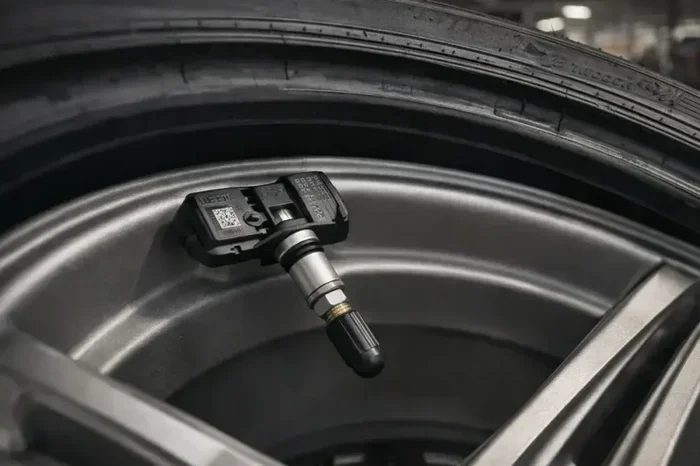
- Direct TPMS: This system uses a physical sensor mounted inside each tire. The sensor sits on the wheel rim or near the valve stem. It measures the actual air pressure and sends a wireless signal to your car’s computer.
- Indirect TPMS: This system does not have a physical sensor inside the tire. Instead, it uses the wheel speed sensors from your ABS system. It detects pressure changes by measuring how fast each tire spins. Uneven rolling speed can signal low pressure.
Most modern vehicles made after 2007 use direct TPMS. This is because government regulations required it for safety reasons. Knowing your tire pressure sensor location helps you understand how this system works in your specific car.
Why Tire Pressure Monitoring Matters for Safety
Driving with incorrect tire pressure is dangerous. Underinflated tires can overheat, which increases the risk of a blowout. Overinflated tires reduce your grip on the road, especially in wet conditions. The TPMS exists to warn you before these dangers become real problems.
According to the National Highway Traffic Safety Administration, properly inflated tires improve fuel economy, handling, and overall safety. Your tire pressure sensor location plays a direct role in keeping all of this working correctly.
Where Is the Tire Pressure Sensor Located?
The tire pressure sensor location depends on the type of vehicle you drive and the TPMS system it uses. Let us break this down by vehicle type so you can find exactly where your sensor sits.
Passenger Cars and Sedans
In most passenger cars, the tire pressure sensor is located inside the tire, mounted on the wheel rim. You will usually find it near the valve stem. The sensor clips or screws onto the rim and sits inside the tire where it can measure air pressure directly.
To see the sensor, you would need to remove the tire from the rim. Once off, the sensor looks like a small metal cylinder or box attached to the rim. It has a small rubber grommet that seals it in place and a battery-powered transmitter on top.
For sedans, the tire pressure sensor location is typically the same on all four wheels. Each tire has its own individual sensor. This allows the system to monitor each tire separately and alert you if one goes out of range.
SUVs and Light Trucks
SUVs and light trucks follow a similar pattern. The tire pressure sensor location is inside the tire, mounted on the wheel rim. However, larger vehicles sometimes have different sensor sizes to fit bigger rims.
Some trucks and SUVs use a snap-in type of sensor that fits into the valve stem hole. Others use a clamp-in style that bolts directly to the rim. Both types serve the same purpose. They measure pressure and send data wirelessly to your vehicle’s computer.
If you drive a truck with larger wheels, the sensor may sit deeper inside the tire well. This is normal and does not affect performance. The tire pressure sensor location simply adapts to the size of the wheel.
Minivans and Crossover Vehicles
Minivans and crossover vehicles also use in-tire sensors. The tire pressure sensor location in these vehicles is usually easy to access because the wheels are smaller than truck wheels. This makes sensor replacement and maintenance simpler.
Many crossover vehicles use a combination of direct and indirect systems. The direct sensor sits inside the tire near the rim, while the indirect system uses existing ABS sensors. Check your owner’s manual to confirm which system your vehicle uses.
European and Luxury Vehicles
Some European and luxury brands use a slightly different approach. Vehicles from manufacturers like BMW, Mercedes-Benz, and Audi often use a band-style sensor. This sensor wraps around the inside of the rim rather than sitting on top of it.
The tire pressure sensor location in these vehicles is still inside the tire, mounted on the rim. However, the band-style design makes it less visible and more integrated into the wheel. This design also tends to be more durable and less prone to damage during tire changes.
Aftermarket and Universal Sensors
Some drivers use aftermarket TPMS sensors. These universal sensors can fit many different vehicles. The tire pressure sensor location for aftermarket sensors is generally the same as OEM sensors. They mount on the rim inside the tire, near the valve stem area.
Aftermarket sensors are a popular choice for older vehicles that do not come with factory TPMS. They are also useful when replacing a damaged OEM sensor. These universal sensors are widely available and relatively affordable.
How to Find Your Specific Tire Pressure Sensor
Now that you know the general tire pressure sensor location, let us talk about how to find yours specifically. The process is straightforward if you follow these steps.
Step 1: Check Your Owner’s Manual
Your vehicle’s owner manual is the best place to start. It contains a section dedicated to the TPMS system. This section will tell you the exact tire pressure sensor location for your make and model. It may also include a diagram showing where the sensor sits on each wheel.
Most manuals also explain how to reset the TPMS after checking or replacing a sensor. This is important information to have on hand.
Step 2: Look at the Valve Stem Area
The valve stem is the small protrusion on your wheel rim where you add air. On most direct TPMS vehicles, the sensor is mounted right behind or around the valve stem. When you remove the valve cap, you may see the sensor body just behind it.
However, you usually cannot see the full sensor without removing the tire. The sensor sits inside the tire, pressed against the inner rim surface. The valve stem often passes through or connects to the sensor housing.
Step 3: Use a TPMS Diagnostic Tool
If you want to confirm the sensor location without removing the tire, a TPMS diagnostic tool can help. These tools scan each wheel and display sensor data. They can also identify which sensor is which based on its unique ID number.
Many auto parts stores offer free TPMS scanning. This is a quick and easy way to check your tire pressure sensor location and sensor health. The tool will also tell you if any sensor battery is low or if a sensor has failed.
Step 4: Consult a Professional Mechanic
If you are still unsure about your tire pressure sensor location, a trusted mechanic can help. A professional has the tools and experience to quickly locate and inspect each sensor. They can also test the sensors and confirm they are working properly.
Many tire shops offer TPMS services as part of their regular maintenance packages. This includes sensor location checks, battery testing, and replacement if needed.
Quick Tips for Finding Your Sensor
- Always start with the owner’s manual. It has the most accurate information for your specific vehicle.
- Do not confuse the TPMS sensor with the tire pressure gauge. The gauge is a handheld tool you use manually. The sensor is the electronic device mounted on the rim.
- Check all four tires. Each tire has its own sensor. The tire pressure sensor location is the same on each wheel, but each sensor has a unique ID.
- Look for the sensor near the valve stem. This is the most common mounting point across all vehicle types.
- Use a flashlight when inspecting. The sensor area can be dark and hard to see without good lighting.
Common Signs Your Tire Pressure Sensor Needs Attention
Your TPMS system gives you several warning signs when something is wrong. Recognizing these signs early can prevent bigger problems down the road.
The Tire Pressure Warning Light
The most obvious sign is the tire pressure warning light on your dashboard. This light looks like a horseshoe shape with an exclamation point in the center. If this light stays on, it means one or more tires have pressure outside the recommended range.
If the light flashes when you first start the car and then stays solid, it usually indicates a problem with the TPMS system itself. This could mean a sensor has failed, a sensor battery is dead, or there is a communication issue.
Inaccurate Pressure Readings
Sometimes the TPMS light comes on even when your tire pressure looks fine. This can happen if a sensor is malfunctioning or if the sensor battery is dying. In these cases, the tire pressure sensor location still matters because you need to know which sensor to check or replace.
Frequent Pressure Loss
If you find yourself constantly adding air to your tires, the sensor might be trying to tell you something. A slow leak can cause the sensor to trigger repeatedly. In this case, the tire pressure sensor location helps you identify which tire has the problem.
Sensor Battery Warning
Most modern TPMS sensors have a built-in battery that lasts 5 to 10 years. When the battery gets low, the system will often display a specific warning. This warning usually appears as a TPMS fault message on your dashboard. The tire pressure sensor location becomes important here because you need to access the sensor to replace the battery or the entire unit.
Tips for Maintaining Your Tire Pressure Sensor
Taking care of your TPMS sensors helps them last longer and work more accurately. Here are some practical tips to keep in mind.
Check Your Tire Pressure Regularly
Even though your TPMS monitors pressure automatically, it is still a good idea to check manually with a tire pressure gauge. This gives you a backup reading and helps you catch slow leaks early. Most vehicles have a sticker on the driver’s door jamb that shows the recommended tire pressure for your specific car.
Keep Sensors Clean
Dirt, road salt, and debris can build up around the sensor area. Over time, this can interfere with the sensor’s signal. When you wash your car, take a moment to gently clean around the valve stem area on each wheel.
Replace Sensors When Changing Tires
If you replace your tires, consider replacing the TPMS sensors at the same time. Sensor batteries have a limited lifespan, and starting fresh with a new battery ensures accurate readings. The tire pressure sensor location makes this a straightforward swap when the tire is already off the rim.
Reset the TPMS After Maintenance
After checking or adjusting your tire pressure, always reset the TPMS system. Most vehicles have a reset button located in the driver’s area. Check your owner’s manual for the exact location. Resetting the system clears any stored fault codes and allows the sensors to relearn the current pressure levels.
Use the Right Sensor for Your Vehicle
Not all TPMS sensors are the same. Each vehicle model uses a specific sensor type that matches its system. When replacing a sensor, make sure you use the correct one for your vehicle. Using the wrong sensor can cause the TPMS light to stay on or display inaccurate readings.
When to Replace Your Tire Pressure Sensor
TPMS sensors do not last forever. Eventually, the battery inside each sensor will die, or the sensor itself will fail. Here are the most common situations when you should replace your tire pressure sensor.
If your TPMS light stays on even after you inflate your tires to the correct pressure, the sensor may be faulty. If you get a TPMS fault message that does not go away after a reset, the sensor battery is likely dead. If one sensor consistently gives different readings than the others, it may need replacement.
Replacing a sensor involves accessing the tire pressure sensor location, removing the old sensor, and installing a new one. This is a job most tire shops and mechanics can do quickly. The cost typically ranges from 50 to 100 dollars per sensor, depending on your vehicle type and whether you choose OEM or aftermarket parts.
Some drivers choose to replace all four sensors at once, especially if the vehicle is several years old. This ensures all sensors have fresh batteries and work together reliably. It also prevents the hassle of dealing with multiple sensor failures over a short period.
Key Takeaways
- Your tire pressure sensor is located inside the tire, mounted on the wheel rim near the valve stem.
- Direct TPMS uses physical sensors inside each tire, while indirect TPMS relies on ABS wheel speed sensors.
- Your owner’s manual provides the exact tire pressure sensor location for your specific vehicle.
- Common warning signs include a dashboard TPMS light, inaccurate readings, and frequent pressure loss.
- Regular maintenance, such as cleaning sensors and checking tire pressure manually, extends sensor life.
- Sensor batteries last 5 to 10 years and should be replaced when they die.
- Professional help is always available if you are unsure about finding or replacing a sensor.
Understanding your tire pressure sensor location empowers you to take better care of your vehicle. When you know where the sensor is and how it works, you can respond quickly to warnings and keep your tires in great shape. This simple knowledge goes a long way toward safer driving, better fuel economy, and fewer unexpected breakdowns.
Make it a habit to check your tire pressure at least once a month. Pay attention to any dashboard warnings. And when your TPMS light comes on, do not ignore it. Your tire pressure sensor is working hard to keep you safe on the road. Give it the attention it deserves by knowing exactly where it is and how to maintain it.
Whether you are a seasoned driver or new to car ownership, learning about your tire pressure sensor location is one of the most useful things you can do. It takes just a little time to understand, but the benefits last for the entire life of your vehicle. Stay proactive, stay informed, and keep those tires properly inflated.
Frequently Asked Questions
Where is the tire pressure sensor located on most vehicles?
The tire pressure sensor is located inside each tire, mounted on the wheel rim near the valve stem. You would need to remove the tire from the rim to see the sensor clearly. Each tire has its own individual sensor that measures air pressure and sends data to your vehicle’s computer.
Can I find the tire pressure sensor location without removing the tire?
Yes, you can find the general area without removing the tire. Look near the valve stem on each wheel rim. The sensor sits just behind or around the valve stem area. However, you will need to remove the tire to fully access and inspect the sensor.
How do I know if my tire pressure sensor battery is dying?
Most vehicles display a specific TPMS fault or sensor battery warning on the dashboard. The tire pressure light may also flash when you first start the car. A TPMS diagnostic tool can confirm which sensor has a low battery by reading the sensor ID and battery status.
What is the difference between direct and indirect TPMS sensors?
Direct TPMS uses a physical sensor mounted inside each tire that measures air pressure directly. Indirect TPMS does not have a physical sensor inside the tire. Instead, it uses the ABS wheel speed sensors to detect pressure changes by monitoring how fast each tire rotates.
How often should I replace my tire pressure sensors?
TPMS sensor batteries typically last between 5 and 10 years. You should consider replacing sensors when the battery dies or when the sensor becomes damaged. Many drivers replace all four sensors at once when changing tires to ensure consistent and reliable readings across all wheels.
Is it safe to drive with the tire pressure warning light on?
It is not recommended to drive with the tire pressure warning light on. Low tire pressure can cause poor handling, reduced fuel economy, and increased risk of a tire blowout. Check your tire pressure as soon as the light appears and address the issue before driving long distances.
=== CONCLUSION ===
Knowing your tire pressure sensor location is one of the simplest yet most valuable things you can learn as a vehicle owner. The sensor sits inside each tire, mounted on the wheel rim near the valve stem. It works hard every time you drive, monitoring your air pressure and keeping you safe on the road.
By understanding how your TPMS system works and where the sensors are located, you can respond quickly to warnings, maintain your tires properly, and avoid costly repairs. Regular checks, timely sensor replacements, and a little preventive care go a long way. Your tire pressure sensor location matters more than most drivers realize, and now you know exactly where to find it and what to do with that information.