Can I Replace Windshield Wipers Myself Without A Mechanic
Yes, you can absolutely replace windshield wipers yourself without visiting a mechanic or spending extra money. This simple DIY task takes under 15 minutes and saves you time and cash on basic car maintenance. We will walk you through every step, from choosing the right wiper blade size to removing the old ones and installing new ones. You will also learn about different wiper types, common mistakes to avoid, and expert tips for long-lasting performance.
Have you ever stood in front of your car during a rainstorm and thought, “These wipers are useless”? You are not alone. Millions of drivers deal with streaky, noisy, or worn-out windshield wipers every single day. The good news is that you do not need a mechanic to fix this problem. You can replace your windshield wipers yourself in the comfort of your driveway or garage.
Replacing windshield wipers yourself is one of the easiest car maintenance tasks you will ever do. It does not require special tools, mechanical knowledge, or a trip to the auto shop. In fact, most people complete the job in under 15 minutes. This guide will show you exactly how to do it, step by step, so you can save money and keep your windshield clear.
Whether you drive a sedan, SUV, truck, or compact car, the process is similar across most vehicles. We will cover everything from picking the right wiper blade size to installing your new wipers correctly. By the end of this article, you will feel confident tackling this simple DIY project on your own.
Key Takeaways
- Easy DIY Task: Replacing windshield wipers yourself is simple, fast, and requires no special tools or mechanical skills.
- Saves Money: Doing it yourself saves you labor costs that mechanics charge for a quick 10-minute job.
- Right Blades Matter: Choosing the correct wiper blade size and type ensures better windshield visibility and longer blade life.
- Quick Process: The entire replacement process takes about 10 to 15 minutes for most vehicles.
- Safety First: Proper wiper maintenance improves driving safety by ensuring clear visibility in rain and snow.
- Regular Replacement: Replacing wiper blades every 6 to 12 months keeps them performing at their best.
- No Mechanic Needed: With a basic guide, anyone can handle wiper blade replacement at home.
📑 Table of Contents
- Why Replacing Windshield Wipers Yourself Makes Sense
- Understanding Windshield Wiper Basics
- How to Choose the Right Wiper Blade Size
- Step-by-Step Guide to Replacing Windshield Wipers Yourself
- Common Mistakes to Avoid When Replacing Wiper Blades
- How Often Should You Replace Your Windshield Wipers?
- Expert Tips for Getting the Most Out of Your Wiper Blades
- When to See a Professional Instead
- Conclusion
Why Replacing Windshield Wipers Yourself Makes Sense
Many drivers put off replacing their wiper blades because they assume it is complicated or expensive. That could not be further from the truth. Let us look at why doing it yourself is a smart move.
Save Money on Simple Car Maintenance
When you take your car to a mechanic for a wiper blade replacement, you are paying for labor. The wiper blades themselves are cheap. A set of quality wiper blades costs between $15 and $40. But a mechanic might charge you $20 to $50 just to install them. That means you could pay $60 or more for a job that takes 10 minutes.
When you replace the wipers yourself, you only pay for the blades. That is a huge savings over time. If you replace your wipers twice a year, you could save $50 to $100 annually by doing it at home.
Convenience and Speed
Think about the time it takes to drive to an auto shop, wait for service, and drive back. That is at least an hour of your day. When you do it yourself, you can replace your wipers while drinking your morning coffee. The entire process is faster than a trip to the mechanic.
You also do not need to worry about scheduling appointments or dealing with busy service centers. Your schedule is your own. You can replace your wipers on a Saturday morning or a lazy Sunday afternoon whenever it works for you.
Better Understanding of Your Vehicle
Doing your own car maintenance builds confidence and knowledge. When you learn how to replace windshield wipers yourself, you also understand more about your vehicle. This knowledge carries over to other simple maintenance tasks. You might find yourself checking tire pressure, changing oil, or replacing air filters on your own too.
Understanding Windshield Wiper Basics
Before you start the replacement process, it helps to understand the basic parts involved. Knowing what you are working with makes the job much easier and less intimidating.
The Main Components of Your Windshield Wipers
Your windshield wiper system has a few key parts that work together to clear your windshield:
- Wiper Blades: The rubber strips that actually touch the glass and wipe away water and debris.
- Wiper Arms: The metal arms that press the blades against the windshield with spring tension.
- Wiper Connectors: The clips or adapters that attach the blade to the arm. Different vehicles use different connector types.
- J-Hook and Bayonet Connectors: The two most common types of wiper blade connectors. The J-hook looks like a curved hook, while the bayonet connector has a pin that slides into the arm.
Types of Wiper Blades Available
Not all wiper blades are the same. There are several types on the market, and choosing the right one matters for performance and durability.
Conventional Wiper Blades: These are the traditional frame-style wipers with a metal skeleton that holds the rubber blade. They are affordable and widely available at any auto parts store. However, they can collect ice and snow more easily in winter conditions.
Beam Wiper Blades (Flat Wiper Blades): These are the sleek, frameless blades that contour to the shape of your windshield. They provide even pressure across the blade for better contact and cleaner wipes. Most modern vehicles come with beam wiper blades from the factory.
Winter Wiper Blades: These blades are designed for cold weather. They have a protective covering or boot that prevents ice from building up on the blade. If you live in a snowy or freezing climate, winter wiper blades are a great investment.
Hybrid Wiper Blades: These combine features of both conventional and beam wipers. They offer the sleek look of a beam blade with the durability of a framed design. They are a solid all-around choice for most drivers.
How to Choose the Right Wiper Blade Size
One of the most important steps is selecting the correct wiper blade size. Using the wrong size means poor coverage and streaky windshield visibility.
Finding Your Wiper Blade Size
You have several options for finding the right size:
- Check your owner’s manual. This is the most reliable source. Look in the maintenance or specifications section.
- Measure the existing blades. Use a tape measure to measure the length of each blade from end to end. Note that the driver and passenger sides are often different sizes.
- Use an online size lookup tool. Many auto parts websites let you enter your vehicle make, model, and year to find the correct wiper blade size.
- Check the packaging at the store. Wiper blade packages usually list compatible vehicle models.
Always double-check the size before purchasing. Even a one-inch difference can lead to poor wiping performance and reduced windshield visibility.
OEM vs Aftermarket Wiper Blades
You will encounter two main categories when shopping for wiper blades: OEM and aftermarket.
OEM (Original Equipment Manufacturer) Wiper Blades: These are the same blades that came with your vehicle from the factory. They are designed specifically for your car model. OEM blades tend to be more expensive but offer a perfect fit.
Aftermarket Wiper Blades: These are made by third-party manufacturers. Brands like Bosch, Rain-X, PIAA, and Anco produce high-quality aftermarket wiper blades. They are often more affordable and sometimes perform better than OEM options. Many aftermarket blades come with features like aerodynamic designs, rubber coatings, and easy-install connectors.
For most drivers, aftermarket wiper blades are the best value. Just make sure you buy from a reputable brand and check compatibility with your vehicle.
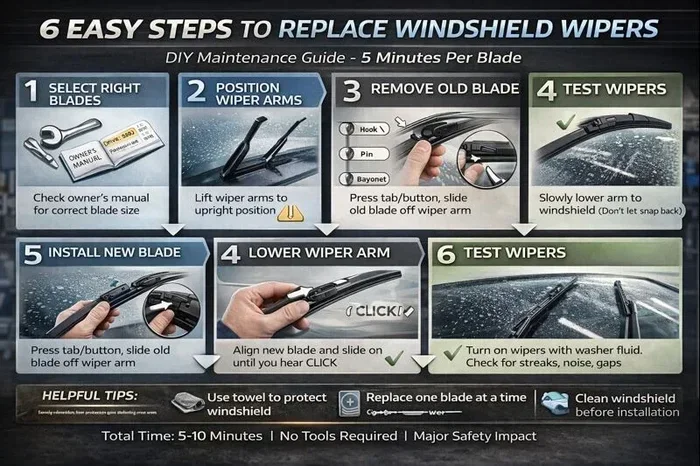
Step-by-Step Guide to Replacing Windshield Wipers Yourself
Now for the part you have been waiting for. Here is the complete process for replacing your windshield wipers without any help from a mechanic.
Step 1: Gather Your Supplies
Before you start, make sure you have everything you need:
- New wiper blades (correct size for your vehicle)
- A clean microfiber cloth
- Windshield washer fluid (optional, for cleaning)
- A flat, stable surface to work on
That is it. You do not need any special tools. No wrenches, no screwdrivers, no complicated equipment. Just the new blades and a cloth.
Step 2: Lift the Wiper Arms
Start by turning your ignition to the “on” or “accessory” position. This unlocks the wiper arms and lets you lift them away from the windshield. If your vehicle does not have this feature, you can still lift the arms gently by hand.
Carefully lift the wiper arm away from the windshield. Be gentle. Wiper arms have spring tension, and if they snap back, they can crack your windshield. Always support the arm with one hand while working with the other.
Step 3: Remove the Old Wiper Blades
Locate the connector where the wiper blade attaches to the wiper arm. The method varies depending on your vehicle type:
- J-Hook Connector: Press the small tab or button on the connector to release the blade from the arm. Slide the blade down and off the hook.
- Bayonet Connector: Push the pin inward and slide the blade off the arm. It should come right off with gentle pressure.
- Side-Lock Connector: Slide the locking tab to the side while pulling the blade toward you. The blade will release from the arm.
Most new wiper blades come with an adapter that fits all connector types. You may need to attach the correct adapter to the new blade before installation.
Step 4: Clean the Wiper Arm and Connector
Use your microfiber cloth to wipe down the wiper arm and connector area. Over time, dirt, grease, and debris build up on these parts. A quick cleaning ensures a proper connection with your new wiper blades. You can also apply a small amount of washer fluid to the cloth for a more thorough clean.
Step 5: Install the New Wiper Blades
Take your new wiper blade and align it with the wiper arm connector. Slide the blade onto the arm until you hear or feel it click into place. Make sure it is securely attached and does not wobble.
Repeat this process for the second wiper blade. Do not forget that the driver and passenger sides often use different sizes, so double-check before installing.
Step 6: Lower the Wiper Arms and Test
Gently lower the wiper arms back down onto the windshield. Do not let them snap down on their own. Place them softly against the glass.
Turn on your windshield wipers and spray some washer fluid. Watch how the blades move across the windshield. They should glide smoothly without skipping, streaking, or chattering. If everything looks and sounds good, you have successfully replaced your windshield wipers yourself.
Common Mistakes to Avoid When Replacing Wiper Blades
Even though this is a simple task, mistakes can happen. Here are some common errors to watch out for.
Buying the Wrong Size
The most common mistake is purchasing the wrong wiper blade size. Always verify the size using your owner’s manual or a reliable size lookup tool. Using blades that are too short leaves gaps on your windshield, while blades that are too long may not seat properly on the wiper arm.
Forcing the Connector
Never force a connector. If the blade does not slide on easily, check that you have the right adapter type. Forcing parts can damage the wiper arm or the connector, leading to costly repairs.
Letting Wiper Arms Snap Back
This is a real danger. Wiper arms are under strong spring pressure. If you accidentally release them, they can slam onto your windshield and cause cracks or chips. Always lower the arms gently and with control.
Ignoring the Rubber Quality
Not all wiper blades are created equal. Cheap blades with low-quality rubber wear out quickly and leave streaks. Invest in blades from trusted brands that use high-grade rubber or silicone compounds. The extra cost is worth the improved windshield visibility and longer lifespan.
Skipping Regular Replacement
Some drivers replace their wipers only when they completely fail. This is a mistake. Wiper blades degrade gradually, and you may be driving with reduced visibility long before you notice streaking. Replace your wiper blades every 6 to 12 months as part of your regular car maintenance routine.
How Often Should You Replace Your Windshield Wipers?
The general rule is to replace your wiper blades every 6 to 12 months. However, several factors can shorten their lifespan:
- Harsh Sunlight: UV rays break down the rubber on wiper blades faster, especially in sunny and hot climates.
- Cold Weather: Freezing temperatures make the rubber brittle and prone to cracking. Winter conditions wear out blades quickly.
- Dust and Debris: Driving on dirt roads or in dusty areas causes extra friction and accelerates blade wear.
- Frequent Use: If you use your wipers daily due to frequent rain or snow, the blades will wear out faster.
- Salt and Chemicals: Road salt and de-icing chemicals can corrode the rubber and metal parts of your wiper system.
A good habit is to inspect your wiper blades every month. Look for cracks, tears, or uneven wear on the rubber edge. If you notice streaking, chattering, or skipping, it is time for a replacement.
Expert Tips for Getting the Most Out of Your Wiper Blades
Want your new wiper blades to last longer and perform better? Follow these expert tips.
Clean Your Windshield Regularly
Dirt and grit on your windshield act like sandpaper on wiper blades. Clean your windshield every time you fill up your gas tank. Use a quality glass cleaner and a microfiber cloth for the best results.
Lift Wiper Arms in Winter
If you live in a cold climate, lift your wiper arms away from the windshield during winter storms. This prevents the blades from freezing to the glass and reduces ice buildup on the rubber. It also protects your wiper motor from strain.
Use Windshield Washer Fluid
Never use water instead of windshield washer fluid. Washer fluid contains solvents that help dissolve bugs, grime, and road grime. It also has antifreeze properties that prevent freezing in cold weather. Using water can leave mineral deposits on your blades and reduce their effectiveness.
Wipe the Blades with a Damp Cloth
Every few weeks, take a damp cloth and wipe down the rubber edge of your wiper blades. This removes built-up oil, dust, and debris that cause streaking. This simple habit can extend the life of your wiper blades by several months.
Store Spare Blades Properly
If you buy extra wiper blades for future use, store them in a cool, dry place. Avoid leaving them in your car trunk where extreme heat and cold can degrade the rubber before you even install them.
When to See a Professional Instead
Replacing windshield wipers yourself works for the vast majority of vehicles. However, there are situations where professional help is the better choice.
If your wiper arms are bent, broken, or have lost their spring tension, a mechanic can replace or repair them safely. If you have a rare or luxury vehicle with a complex wiper system, the connector type might be unusual and harder to figure out on your own. And if you notice electrical issues, such as wipers not responding when you turn them on, the problem likely involves the wiper motor or fuse, which requires professional diagnosis.
For routine wiper blade replacement on a standard vehicle, though, you have everything you need to do it yourself. Trust the process, follow the steps, and enjoy the satisfaction of completing a simple car maintenance task on your own.
Conclusion
Replacing your windshield wipers yourself is one of the easiest and most rewarding DIY car maintenance tasks you can do. It saves you money, takes only minutes, and requires no special skills or tools. With the right wiper blade size, a basic understanding of the wiper assembly, and this step-by-step guide, you can handle the job confidently at home.
Do not wait until your wipers are failing in the middle of a downpour. Make wiper blade replacement part of your regular maintenance schedule. Check your blades every month, replace them every 6 to 12 months, and keep your windshield clear and safe. Once you learn how to replace windshield wipers yourself, you will never pay a mechanic to do it again.
Take a few minutes today to inspect your current wiper blades. If they are worn or streaky, order a new set and swap them out this weekend. Your windshield visibility and driving safety depend on it.
Frequently Asked Questions
How long does it take to replace windshield wipers yourself?
For most vehicles, the entire process takes between 5 and 15 minutes. Once you have the correct wiper blade size and understand the connector type, the job is quick and straightforward. Many drivers complete it in under 10 minutes after their first attempt.
What size wiper blades do I need for my car?
You can find the correct wiper blade size by checking your vehicle owner’s manual, measuring the existing blades with a tape measure, or using an online size lookup tool on auto parts websites. Most vehicles have different sizes for the driver and passenger sides, so always verify both.
Can I use any wiper blade brand for my car?
You can use any brand as long as the blade matches the correct size and connector type for your vehicle. Popular brands like Bosch, Rain-X, and PIAA are widely available and offer reliable performance. Always check compatibility before purchasing.
How often should I replace my windshield wiper blades?
It is recommended to replace your wiper blades every 6 to 12 months. However, harsh weather conditions, frequent use, and exposure to sunlight can shorten their lifespan. Inspect your blades monthly and replace them as soon as you notice streaking or chattering.
Do I need any special tools to replace wiper blades at home?
No special tools are needed. You only need the replacement wiper blades and a clean microfiber cloth. The entire process is tool-free and designed to be simple enough for anyone to complete at home without mechanical experience.
Is it safe to lift the wiper arm when the engine is off?
Yes, it is safe to lift the wiper arm when the engine is off, but it is easier to do with the ignition in the “accessory” or “on” position because this unlocks the wiper system. Always support the arm with one hand to prevent it from snapping back and potentially damaging your windshield.