Do Tires Get Rotated With Your Regular Oil Change Service
Do tires get rotated with an oil change? The short answer is: it depends on your service provider and vehicle. Many oil change services include tire rotation as a complimentary add-on, but not all shops do it automatically. Regular tire maintenance keeps your tread wear even and extends the life of your tires. Understanding how tire rotation works with your vehicle maintenance schedule saves you money and keeps you safe on the road.
You pull into your local shop for a routine oil change. The service advisor hands you a checklist. You scan it quickly. And then you see it: tire rotation, listed as an add-on service.
Wait. Do tires get rotated with an oil change? Or is this just an upsell? It is a fair question. Many car owners wonder whether their regular oil change service should include tire rotation. The answer is not always straightforward, but it matters more than most people think.
Tire rotation is one of the simplest yet most overlooked parts of vehicle maintenance. When done correctly and on schedule, it keeps your tires wearing evenly. It also improves your car’s handling, fuel efficiency, and overall safety. In this guide, we will break down everything you need to know about tire rotation during an oil change. You will learn what to expect, when to say yes, and how to save money while keeping your car in top shape.
Key Takeaways
- Tire rotation is often included: Many oil change packages offer tire rotation at no extra cost, but you should always confirm with your service center.
- Regular rotation extends tire life: Rotating your tires every oil change or 5,000 to 7,500 miles promotes even tread wear and boosts tire health.
- Rotation patterns vary: The correct rotation pattern depends on your drivetrain, tire type, and whether you have directional tires.
- It improves safety: Evenly worn tires provide better traction, handling, and braking, which is essential for tire safety.
- Not all shops do it automatically: Some mechanics only rotate tires if you request it or pay extra, so always ask.
- Check your owner’s manual: Your vehicle manufacturer provides specific guidelines for how often and when to rotate your tires.
- Combine services for savings: Bundling tire rotation with your oil change saves time and often reduces overall car maintenance costs.
📑 Table of Contents
- What Happens During an Oil Change Service?
- Do Tires Get Rotated With an Oil Change?
- Why Tire Rotation Matters So Much
- How Often Should You Rotate Your Tires?
- Different Tire Rotation Patterns Explained
- Quick Tips for Tire Rotation and Oil Change
- Common Mistakes People Make With Tire Rotation
- Expert Insights on Tire Rotation and Oil Change Timing
- How Tire Rotation Fits Into Your Overall Car Maintenance
- Conclusion
What Happens During an Oil Change Service?
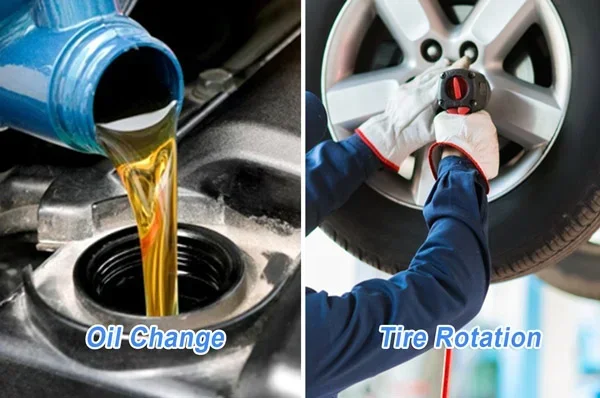
Before we dive into tire rotation, let us first understand what a standard oil change involves. Most drivers know the basics. You bring your car in. A technician drains the old engine oil. They replace the oil filter. They pour in fresh oil. But the full oil change service often includes more than that.
Typical Services Included in an Oil Change
Many quick-lube shops and dealerships bundle additional services with an oil change. These may include:
- Engine oil and filter replacement
- Tire rotation (sometimes complimentary)
- Fluid level checks (coolant, brake fluid, transmission fluid)
- Battery voltage test
- Air filter inspection
- Wiper blade check
- Light inspection
- Basic undercarriage visual check
Not every shop includes tire rotation by default. Some list it as an upsell. Others include it in their premium or full-service packages. This is why it pays to ask before you pull into the bay.
Why Oil Changes Are So Important
Fresh engine oil lubricates your engine’s moving parts. It reduces friction. It prevents overheating. Over time, oil breaks down and loses its effectiveness. Dirty oil causes increased wear on engine components. This can lead to costly repairs down the road. Sticking to a regular oil change schedule is one of the easiest ways to protect your engine and keep your car running smoothly for years.
Do Tires Get Rotated With an Oil Change?
Now let us address the big question. Do tires get rotated with an oil change? The answer depends on three main factors: your service provider, your vehicle, and your maintenance routine.
When Tire Rotation Is Included
Many full-service oil change centers include tire rotation at no extra charge. These shops want to build long-term relationships with customers. They know that offering bundled services keeps people coming back. If you visit a quick-lube chain or a dealership service center, there is a good chance they will rotate your tires during an oil change.
Some shops include it automatically. Others only do it if you ask or if you have a loyalty membership. Always check the details of your service package. A quick phone call or a glance at your service menu can save you from surprise charges or missed maintenance.
When Tire Rotation Is Not Included
Budget oil change shops sometimes skip tire rotation unless you specifically request it. They focus on speed and low cost. Tire rotation takes extra time, and some shops do not build it into their standard workflow. If you are in a hurry and only want a basic oil change, you might walk out without your tires getting rotated.
This does not mean you should skip rotation altogether. It simply means you need to be proactive about your tire maintenance schedule.
How to Know If Your Oil Change Includes Rotation
The easiest way to find out is to ask. When you book your appointment, say this: “Does my oil change package include tire rotation?” Most service advisors will give you a clear answer right away. You can also check your service invoice afterward. If tire rotation appears as a separate line item, it was not included in the base price.
Why Tire Rotation Matters So Much
You might wonder why tire rotation even matters. Your tires are the only part of your car that touches the road. Their condition directly affects your safety, comfort, and fuel economy. Here is why regular tire rotation deserves a spot on your vehicle maintenance schedule.
Promotes Even Tire Tread Wear
Not all four tires wear at the same rate. Your front tires handle steering, braking, and most of the cornering force. As a result, they often wear faster than your rear tires. Without rotation, you end up with uneven tread wear. One tire might be nearly bald while another still has plenty of tread depth left.
Rotating your tires moves them to different positions on the car. This balances the wear across all four tires. The result? Your tires last longer. You get more miles out of every set.
Improves Vehicle Handling and Safety
Evenly worn tires grip the road more consistently. This means better traction in rain, snow, and dry conditions. Your car handles more predictably when all four tires are in similar condition. This is especially important during emergency braking or sharp turns.
Unevenly worn tires can cause your car to pull to one side. They can also increase stopping distances. Both of these issues are serious safety concerns. Regular tire rotation helps prevent them.
Saves You Money in the Long Run
New tires are expensive. A full set can cost several hundred dollars or more. By rotating your tires regularly, you extend their lifespan. This delays the need for a tire replacement. Over time, the savings add up significantly. Think of tire rotation as a small investment that pays off big.
Boosts Fuel Efficiency
Worn or unevenly worn tires create more rolling resistance. This means your engine has to work harder to keep the car moving. The result is lower fuel efficiency. Fresh, evenly rotated tires reduce rolling resistance. They help your car glide more smoothly on the road. Over months and years, this can save you real money at the pump.
How Often Should You Rotate Your Tires?
Most manufacturers recommend rotating your tires every 5,000 to 7,500 miles. This aligns closely with most oil change intervals. That is why combining tire rotation with an oil change makes so much sense. It keeps both services on the same schedule.
General Guidelines for Tire Rotation Frequency
Here are some common guidelines to follow:
- Every oil change: If you get an oil change every 5,000 miles, rotate your tires at the same time.
- Every 7,500 miles: Many vehicle manufacturers recommend this interval for both oil changes and tire rotation.
- Every 10,000 miles: Some newer vehicles with all-wheel-drive systems may follow a slightly longer rotation schedule.
- Seasonally: If you switch between all-season and winter tires, rotate them during the tire swap.
Always refer to your owner’s manual for the manufacturer’s specific recommendation. Your driving habits also matter. If you drive in stop-and-go traffic or on rough roads, you may need to rotate more frequently.
Signs Your Tires Need Rotation
Sometimes you do not need to wait for a mileage marker. Your tires will tell you when they need attention. Watch for these warning signs:
- Uneven tread wear: One tire shows significantly more wear than the others.
- Vibration while driving: You feel a shaking sensation at highway speeds.
- Reduced traction: Your car feels less stable on wet or icy roads.
- Pulling to one side: Your steering wheel drifts left or right on a straight road.
- Increased road noise: Your tires make more humming or thumping sounds than usual.
If you notice any of these signs, do not wait for your next oil change. Get your tires inspected and rotated as soon as possible.
Different Tire Rotation Patterns Explained
Not all tire rotations are the same. The correct rotation pattern depends on your drivetrain, tire type, and whether your tires are directional or non-directional. Here is a breakdown of the most common patterns.
Forward Cross Pattern
This is the most common pattern for front-wheel-drive vehicles. The front tires move straight back, and the rear tires move to the opposite side at the front. It looks like a forward cross when you draw it out. This pattern works well for non-directional tires on FWD cars and trucks.
Rearward Cross Pattern
For rear-wheel-drive and all-wheel-drive vehicles, the rearward cross pattern is often used. The rear tires move straight forward, and the front tires move to the opposite side at the rear. This balances the wear between the front and rear axles.
X-Pattern
The X-pattern works for both front-wheel-drive and rear-wheel-drive vehicles. Each tire moves to the opposite corner diagonally. This pattern is simple and effective for vehicles with non-directional tires.
Side-to-Side Pattern
If your tires are directional (meaning they are designed to spin in only one direction), you cannot swap them front to back. Instead, you swap them side to side on the same axle. This maintains the correct rotation direction while still balancing the wear.
Five-Tire Rotation
Some vehicles come with a full-size spare tire. In this case, you can include the spare in the rotation. The five-tire pattern moves all four wheels and the spare into new positions. This ensures all five tires wear evenly over time.
Quick Tips for Tire Rotation and Oil Change
Here are some practical tips to make the most of your oil change and tire rotation visits:
- Ask upfront: Always confirm whether tire rotation is included in your oil change package before the service begins.
- Keep a log: Track your mileage and service dates in a notebook or phone app. This helps you stay on schedule.
- Inspect your tires: While the car is on the lift, ask the technician to check for cuts, bulges, or embedded objects in the tread.
- Check tire pressure: Properly inflated tires rotate more evenly and last longer. Ask for a pressure check during every visit.
- Combine services: If your shop offers a multi-point inspection with the oil change, take advantage of it. It often includes tire checks at no extra cost.
- Do not skip alignment: If you notice your car pulling to one side, get a wheel alignment checked. Misalignment causes uneven tire wear no matter how often you rotate.
Common Mistakes People Make With Tire Rotation
Even well-meaning car owners sometimes make mistakes when it comes to tire maintenance. Here are the most common ones to avoid.
Skipping Rotation Entirely
This is the biggest mistake. Many drivers only think about their tires when one goes flat or wears out prematurely. By then, the damage is done. Skipping rotation shortens the life of your tires and compromises your safety.
Ignoring the Owner’s Manual
Every vehicle is different. The rotation pattern and frequency that works for a front-wheel-drive sedan may not apply to a rear-wheel-drive truck. Always consult your owner’s manual or ask a trusted mechanist for guidance specific to your vehicle.
Forgetting About Wheel Alignment
Tire rotation does not fix alignment problems. If your wheels are out of alignment, your tires will continue to wear unevenly even after rotation. Get your alignment checked at least once a year or whenever you notice pulling or uneven wear.
Waiting Too Long Between Rotations
If you go 15,000 or 20,000 miles without rotating your tires, the wear imbalance becomes significant. By the time you finally rotate them, you may have already lost thousands of miles of tire life. Stay on top of your schedule.
Ignoring Tire Condition During Rotation
Rotation is the perfect time to inspect your tires closely. Look for uneven wear patterns, low tread depth, and visible damage. Catching a problem early can prevent a blowout or an unexpected tire replacement.
Expert Insights on Tire Rotation and Oil Change Timing
We asked several certified automotive technicians about their thoughts on combining tire rotation with oil changes. Here is what they had to say.
Most technicians agree: rotating your tires at every oil change is ideal. It keeps the schedule simple and consistent. For most drivers, this means a rotation every 5,000 to 7,500 miles. This frequency works well for daily commuters and casual drivers alike.
One veteran mechanic shared this insight: “The drivers who rotate their tires regularly almost never have to replace a tire prematurely. It is one of the cheapest forms of preventive maintenance you can do.”
Another expert added: “If your oil change shop does not offer tire rotation as part of the service, ask them to do it anyway. Most will accommodate the request for a small additional fee. The cost is minimal compared to the value you get.”
The consensus among professionals is clear. Tire rotation belongs as a standard part of every regular oil change service. It is quick, affordable, and has an outsized impact on your vehicle’s overall health and safety.
How Tire Rotation Fits Into Your Overall Car Maintenance
Your car has many moving parts that require regular attention. Oil changes, tire rotations, brake inspections, fluid flushes, and filter replacements all play a role. When you combine these services into a single visit, you save time and often money.
Think of car maintenance like brushing your teeth. A little effort done regularly prevents big problems later. Skipping your oil change leads to engine damage. Skipping tire rotation leads to uneven wear and premature replacement. Both are preventable with a consistent routine.
Building a relationship with a trusted service center makes all the difference. When your mechanic knows your vehicle and your history, they can spot potential issues before they become expensive repairs. They will also remind you when it is time for your next tire rotation or oil change.
Conclusion
Do tires get rotated with an oil change? Often, yes. But it is not guaranteed. The best approach is to be proactive. Ask your service provider if tire rotation is included in your oil change service. If it is not, request it. The small effort pays off in safer driving, better fuel economy, and longer-lasting tires.
Regular tire rotation is one of the simplest yet most impactful things you can do for your vehicle. It keeps your tread wear even. It improves handling and safety. And it saves you from the high cost of early tire replacement. Next time you book an oil change, make tire rotation part of the conversation. Your tires and your wallet will thank you.
Take charge of your vehicle maintenance today. Schedule your next oil change, ask about tire rotation, and enjoy the peace of mind that comes with knowing your car is in great shape.
Frequently Asked Questions
Is tire rotation usually included in an oil change?
It depends on the service provider. Many full-service oil change centers and dealerships include tire rotation in their packages. Budget quick-lube shops may charge extra or skip it altogether. Always confirm with your service center before the work begins.
How much does tire rotation cost if it is not included?
Most shops charge between $25 and $50 for a tire rotation. Some include it for free with other services. The cost is small compared to the money you save by extending the life of your tires through even wear.
Can I rotate my tires myself?
Yes, if you have the right tools and a jack. You will need a jack, jack stands, and a torque wrench. However, professional rotation ensures the correct pattern is followed and allows for a visual inspection of your brakes and suspension components.
What is the best rotation pattern for my vehicle?
The best pattern depends on your drivetrain and tire type. Front-wheel-drive cars typically use a forward cross pattern. Rear-wheel-drive vehicles often use a rearward cross. Directional tires require a side-to-side swap. Check your owner’s manual for the recommended pattern.
Does tire rotation affect alignment?
Tire rotation does not change your alignment. However, it is a great time to check your alignment. Uneven tire wear is often a sign of misalignment. If your tires show uneven wear after rotation, consider getting a wheel alignment checked.
What happens if I never rotate my tires?
Without rotation, your front and rear tires wear at different rates. The front tires on most cars wear out much faster. This means you will need to replace your tires sooner. You will also experience reduced traction, poorer handling, and potentially unsafe driving conditions.
=== META TITLE ===
Do Tires Get Rotated With an Oil Change Service?
=== SEO TITLE ===
Do Tires Get Rotated With Your Regular Oil Change Service?
=== URL SLUG ===
do-tires-get-rotated-with-oil-change-service